Minnesota State Fair Day One: 4-H

We next visited the 4-H building, which was sprawling.  The Arts-In people were mid-performance when we arrived, but we opted to look at the displays.  I planned to go back the next day to catch the full performance.

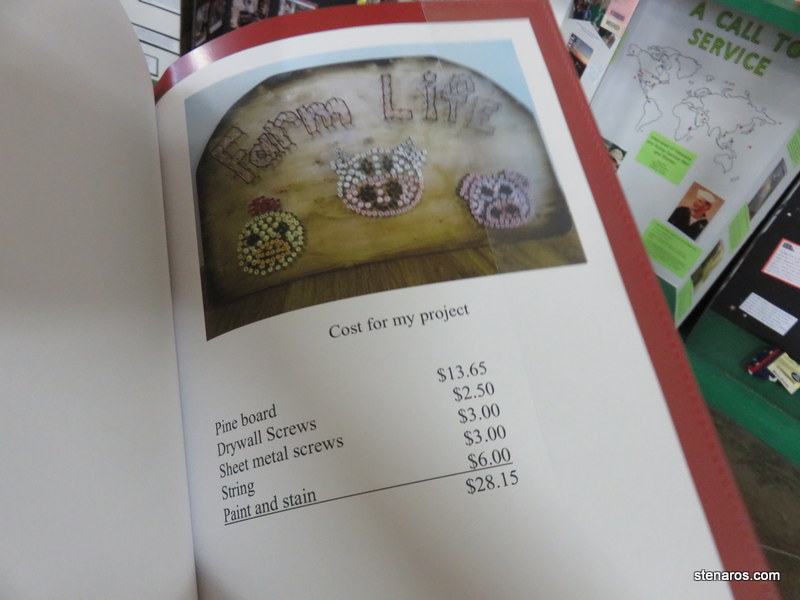
There were many books of projects to look through.  This 4-H-er spent less than $30 to make this string art.

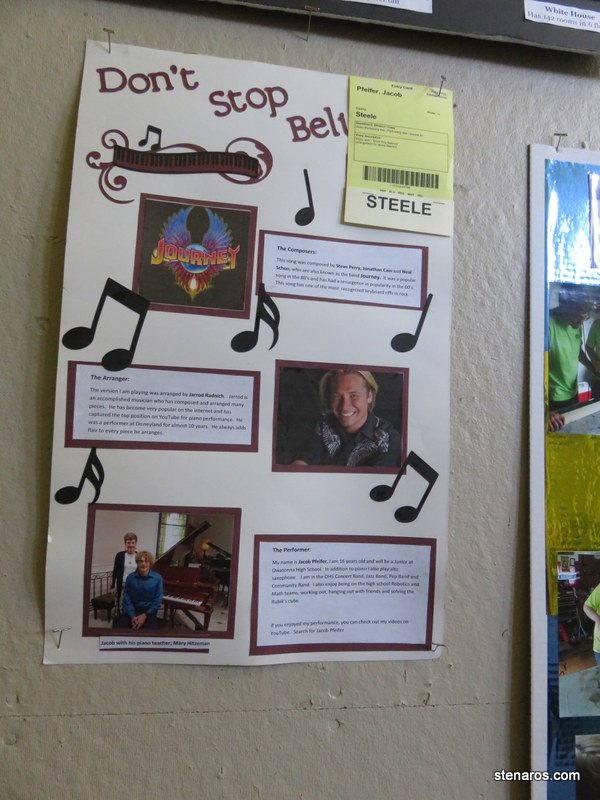
The informational posters are often my favorite part.

Like this one.  Who doesn’t need to know more about the song “Don’t Stop Belivin'”?

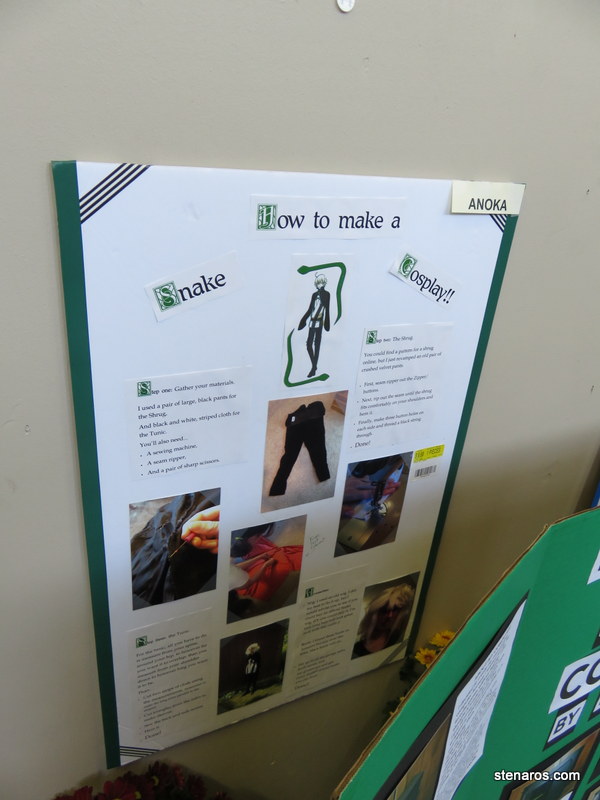
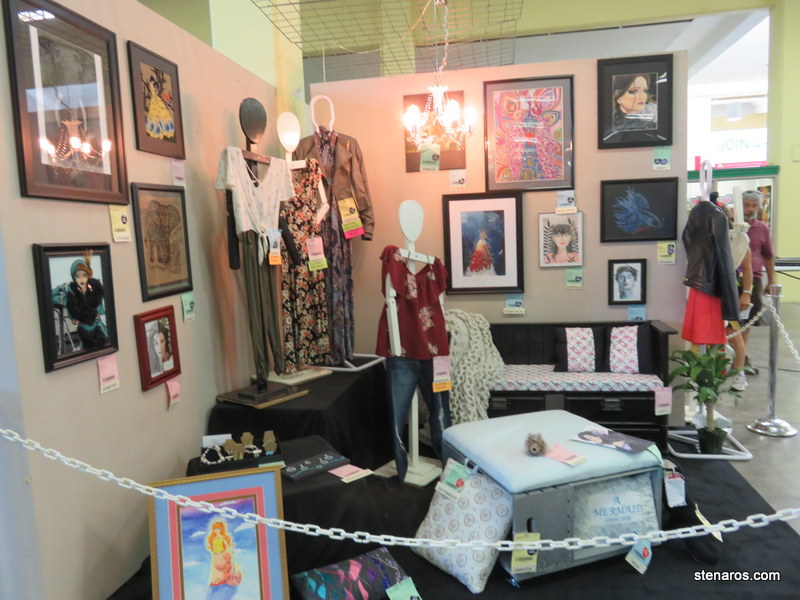
And maybe you have some cosplay needs?

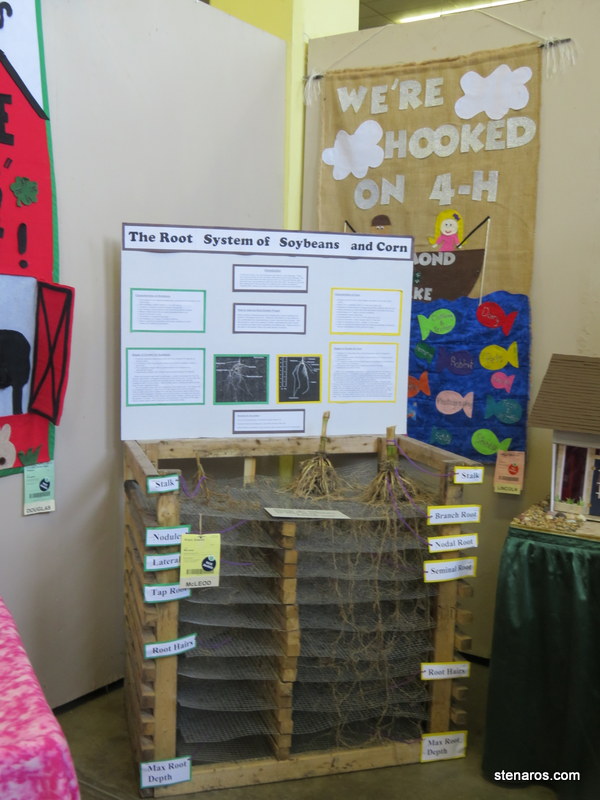
Aside from showing off one of the many 4-H banners on display, this is also my favorite thing I found in the 4-H hall.  What an interesting way to study the root system of soybeans and corn.

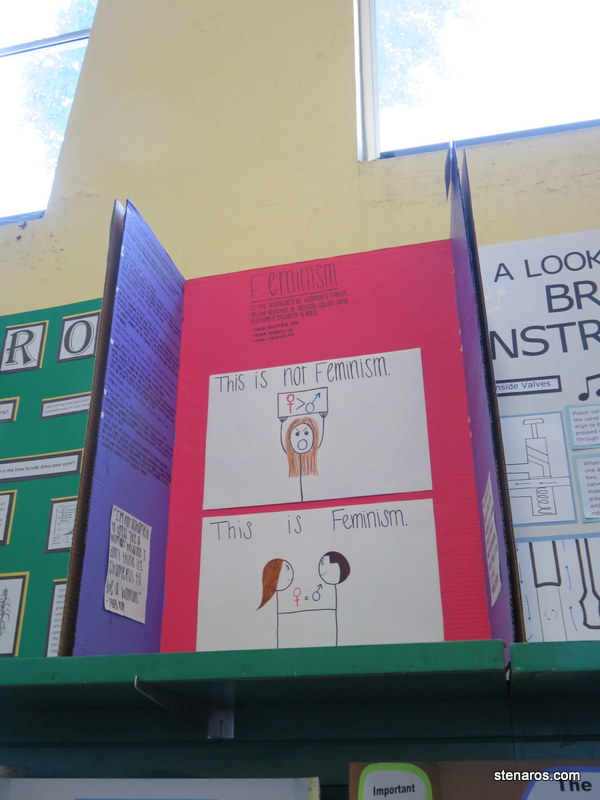
And here’s a good lesson for all.

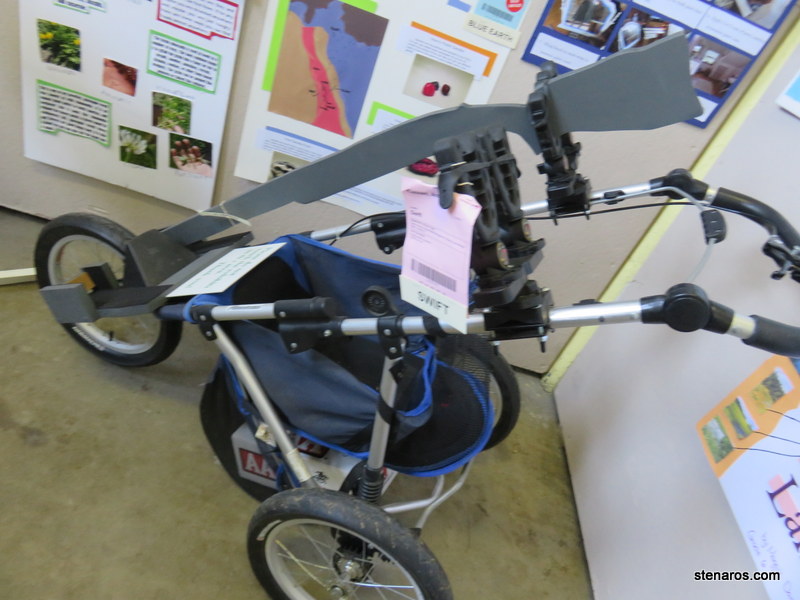
And maybe you need a baby jogger converted into a gun rack?  This 4-H-er has got you covered.

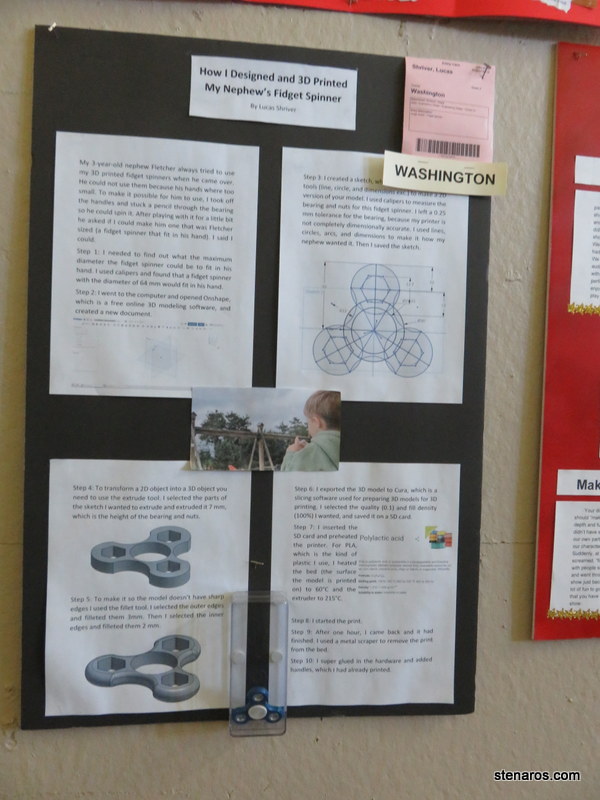
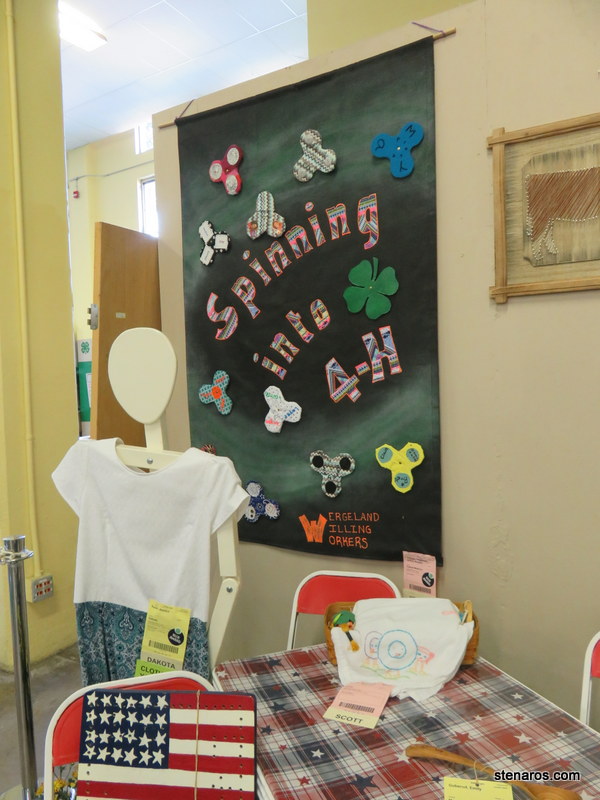
Another banner.  I’m wondering if each group doesn’t make a new one every year?  I don’t think that fidget spinners would have been on people’s radar last year.

I’m going to say this a lot, but the sheer quantity of everything about the fair was mind-boggling.  All of these items had to be collected and then hung, then will be taken down and redistributed.  How many volunteers does it take?

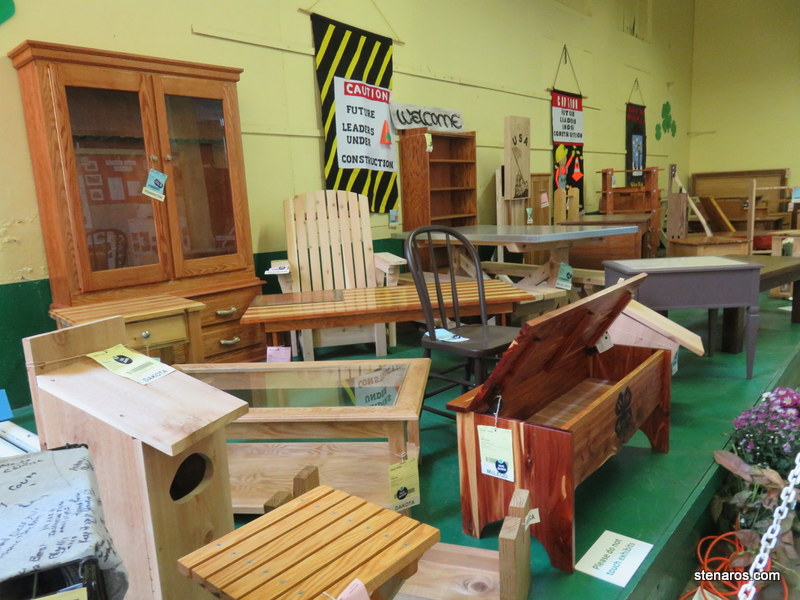
4-H skill at building furniture was on display.

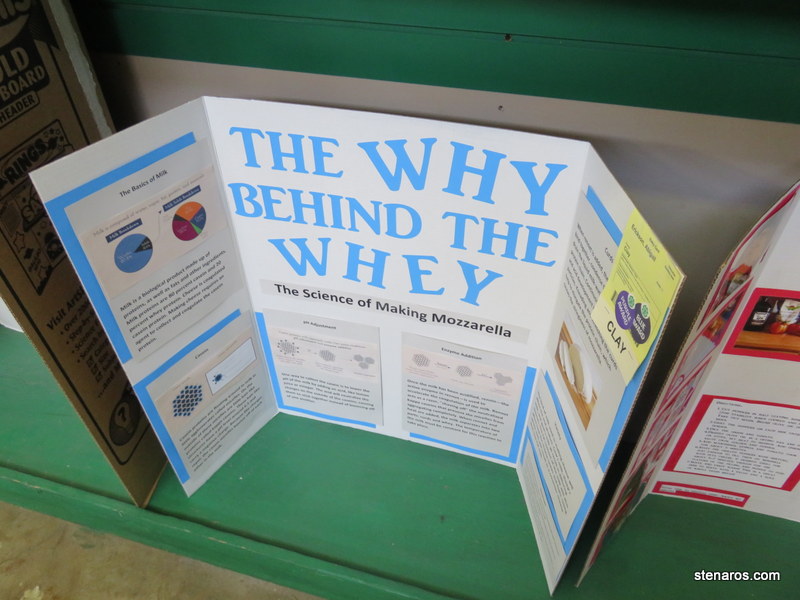
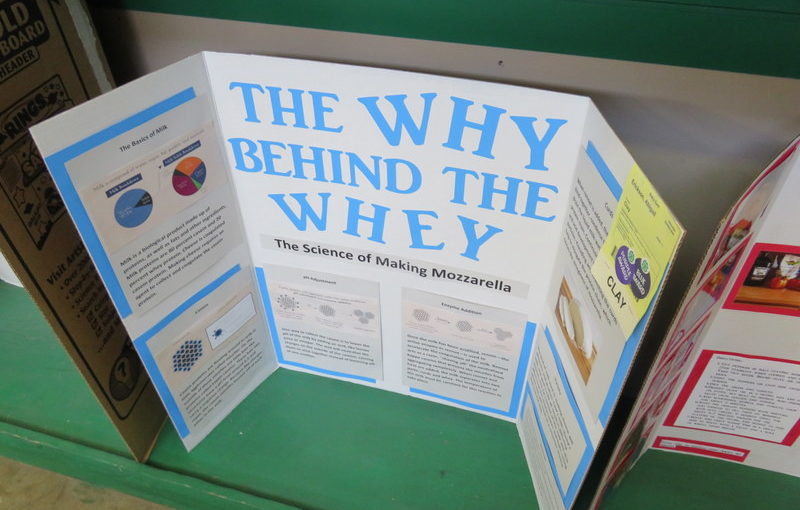
I leave you with science, and cheese.

Minnesota State Fair Day One. Getting there and Fine Arts

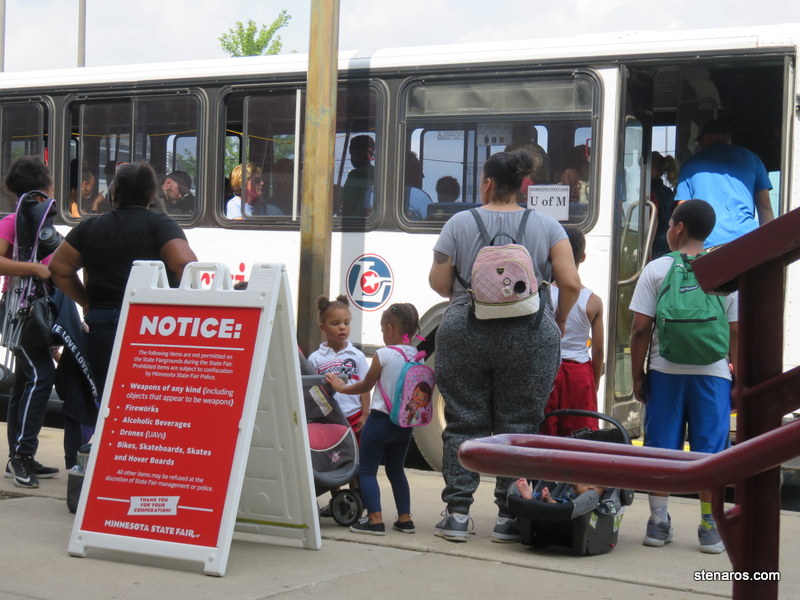
It’s fair time!  Sara and I walked to the U of M shuttle stop and waited. Then realized that we forgot to bring the tickets.  Then we waited for Shawn to appear with the tickets (the original plan was that he was going to join us later) only to eventually figure out that he took the city bus system, not the shuttle system.  It gave us time to observe the large amounts of people who take the shuttle to the fair. The buses come regularly.  Every five to 15 minutes.

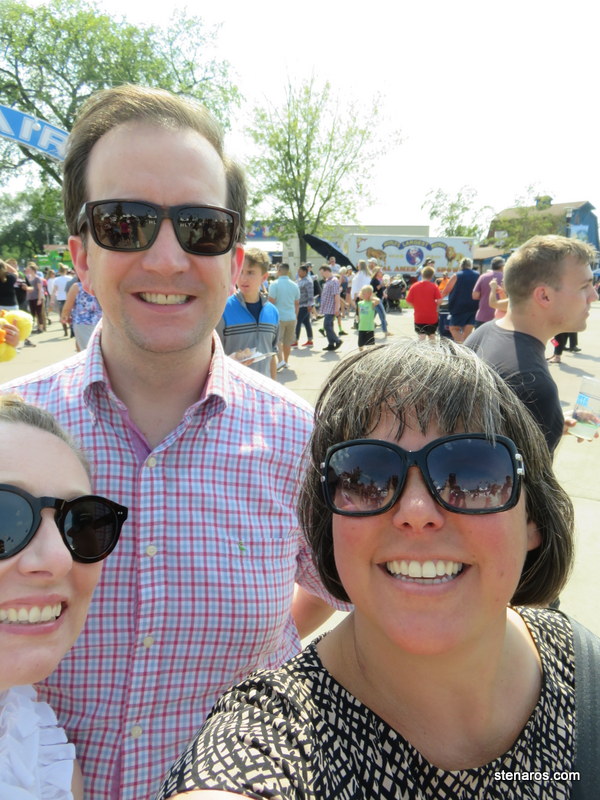
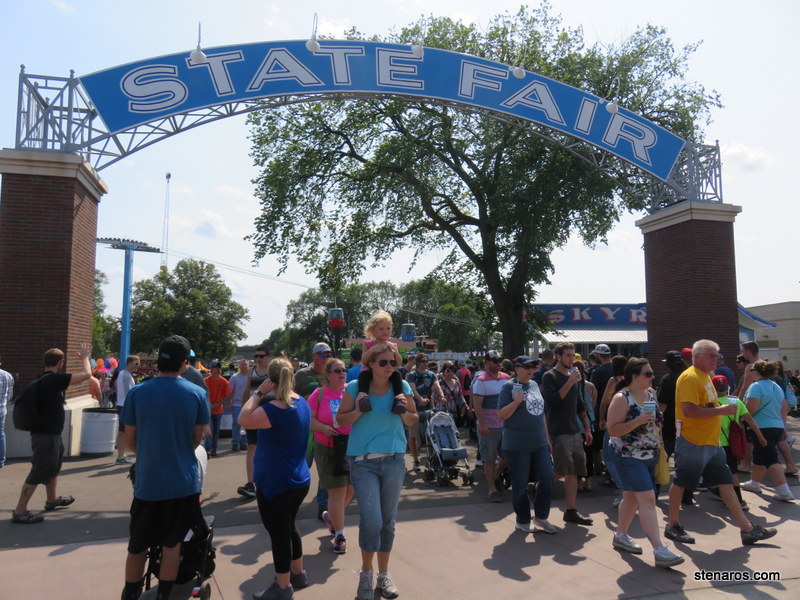
Reunited with Shawn at the entrance!   Here’s a poorly taken self-portrait at the streetcar arch.  It was great Shawn and Sara bought tickets online before the fair started.  The line to buy tickets on-site was very, very long. Long lines come with the fair, so it was nice to skip that one.

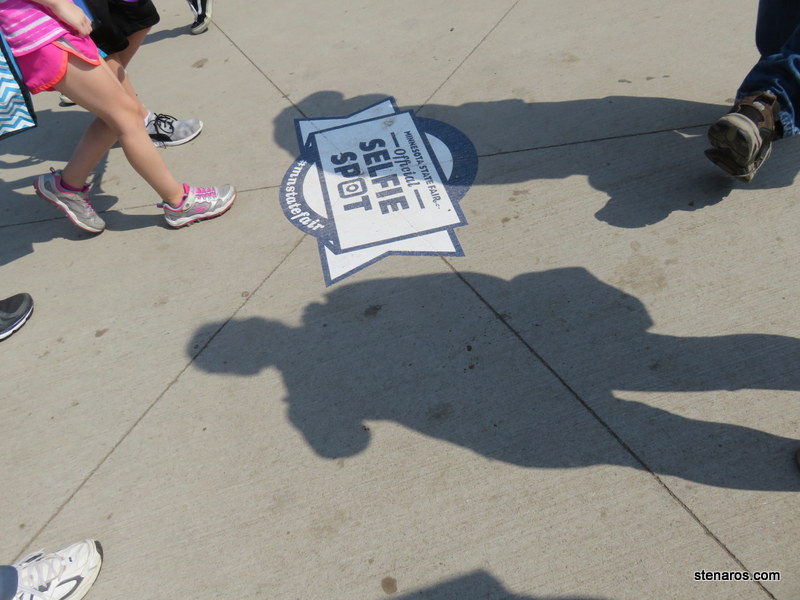
The fair even has mapped out the best place for a self-portrait.

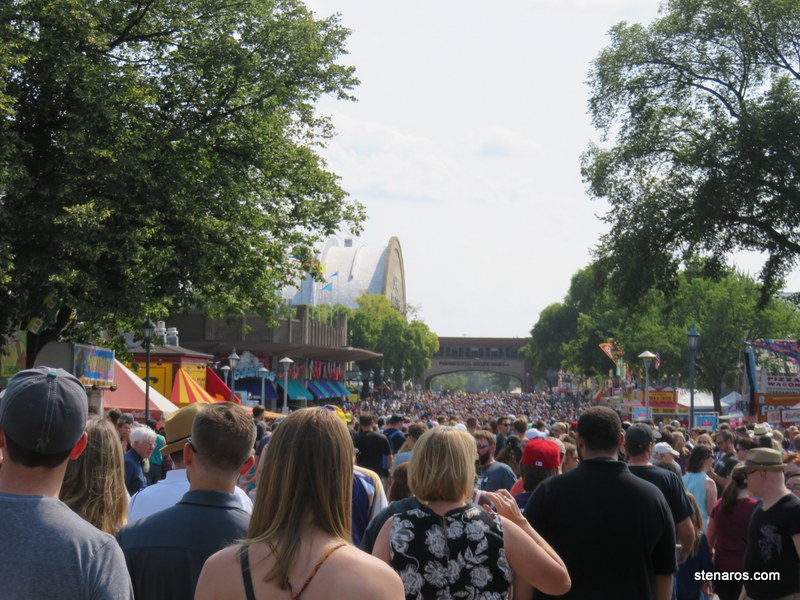
There were a lot of people there.  Apparently, it had rained the previous weekend, so THIS was the weekend to go.

How many people attended on this day?  254,431.  Yep. Bigger than my hometown of Boise, Idaho.

Shawn navigated us through the crowds and we took in the fine art at the fine arts building. I “bought” Sara a lot of things.  There was a really cool Rube Goldberg machine that was not for sale.  Which was too bad, because interest was high among the fair-goers.  It probably would have gone for a good price.

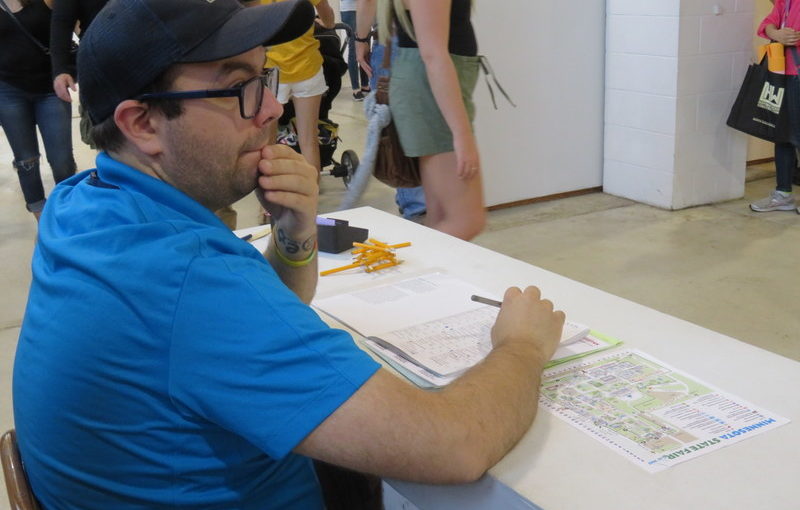
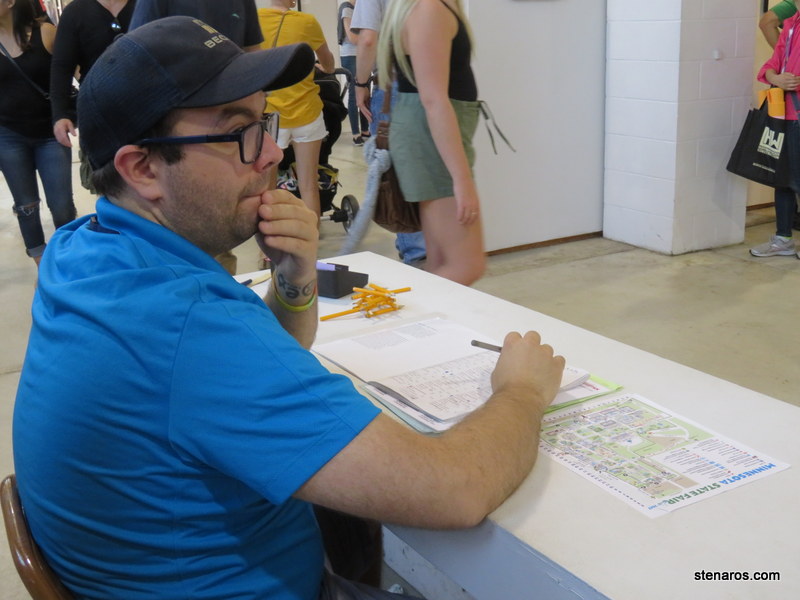
This volunteer kept an eye on us, and was ready to help.  Notice the stack of pencils to his left.

Capitol Wander

After our campus tour, and a trip home for lunch, we took the light rail to St. Paul to visit the newly renovated capitol building.

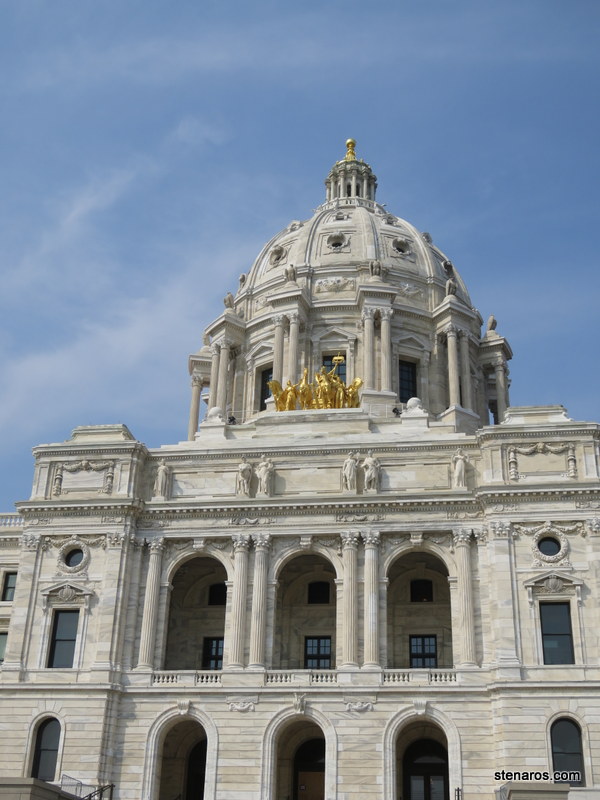
It looks great, as every newly renovated capitol should.

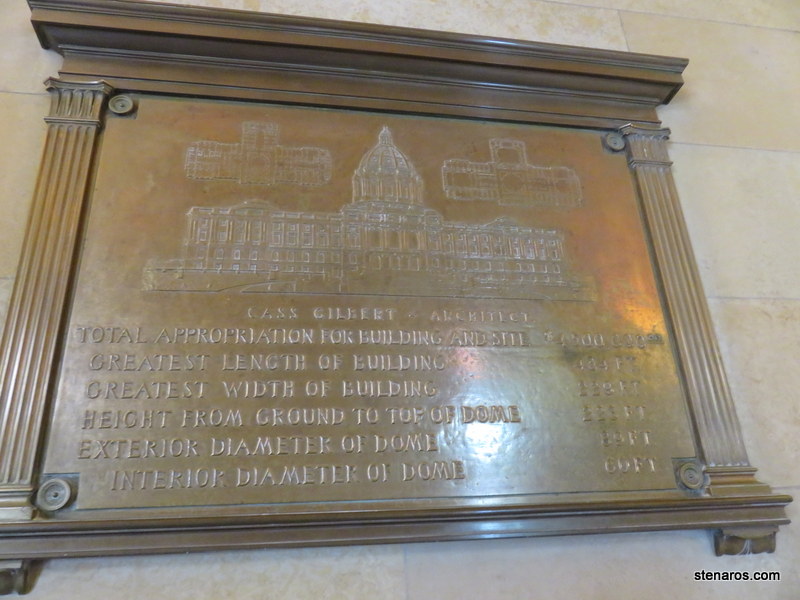
Here’s the informative plaque when the capitol was first built.  The renovation had a similarly-styled plaque across the hallway.  I neglected to take a picture of it.

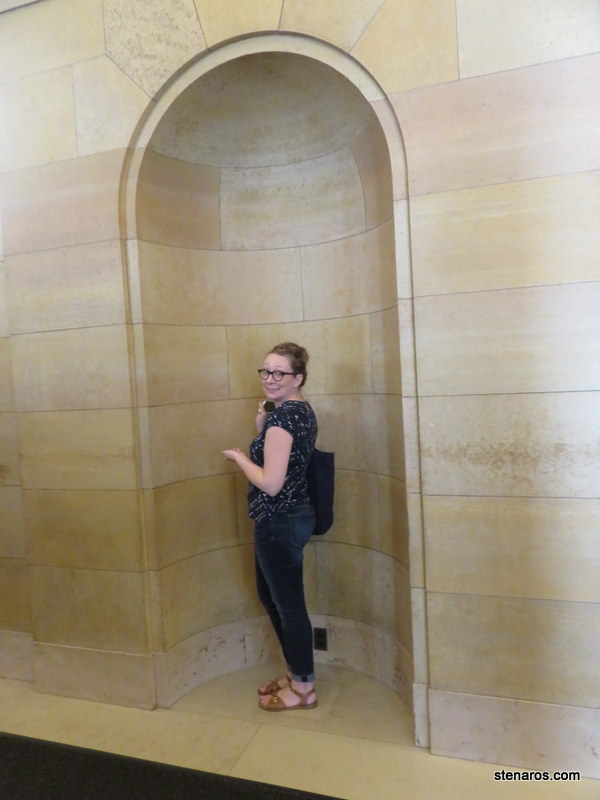
Sara fills an empty niche.  Why is this niche empty?

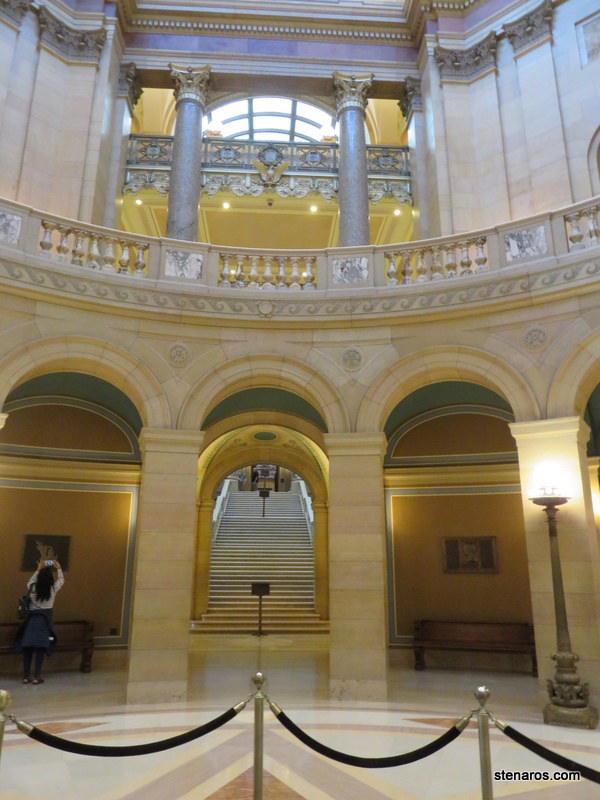
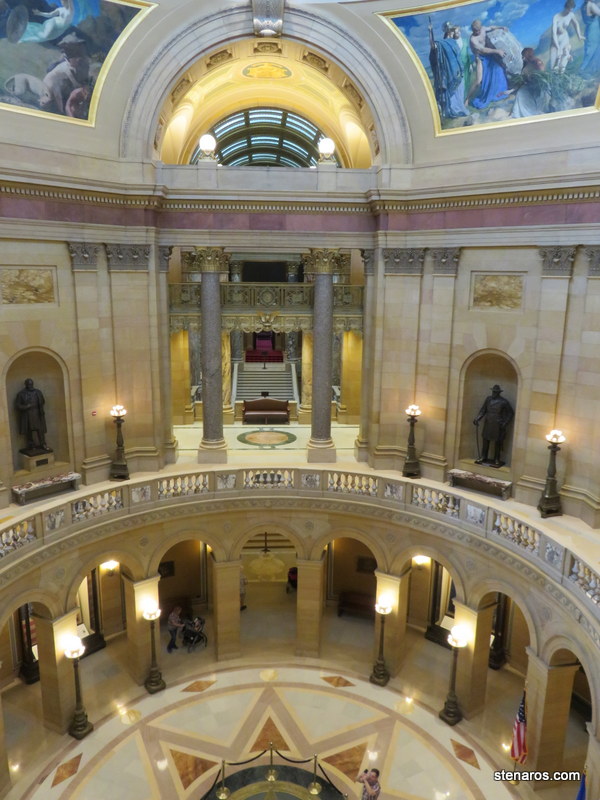
There is a grand view under the rotunda.

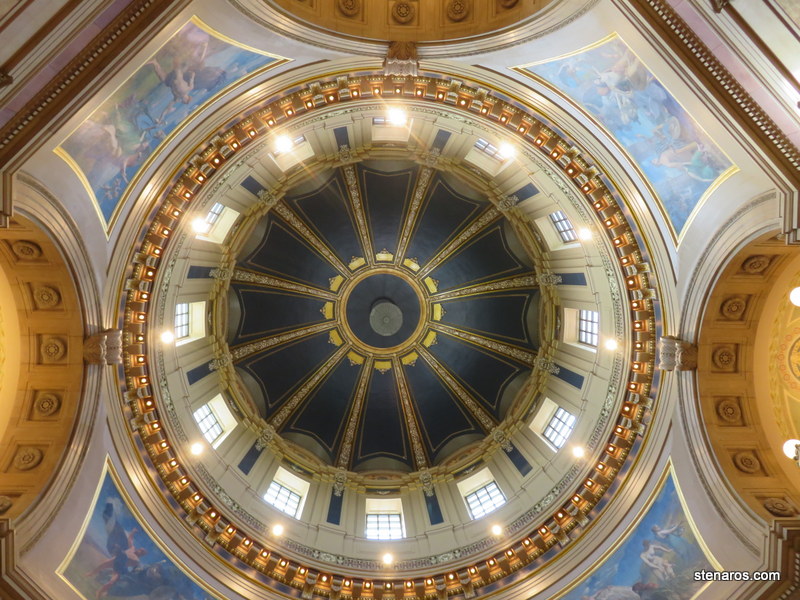
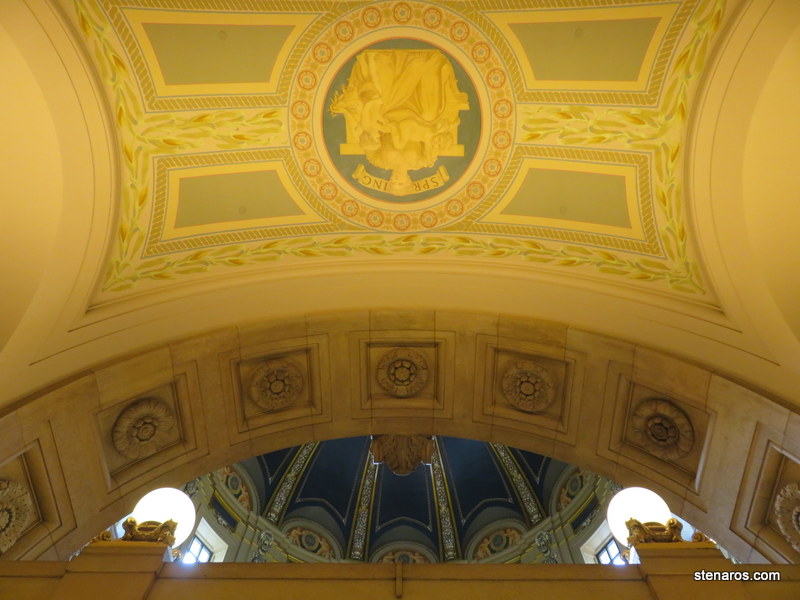
The rotunda itself was very impressive.

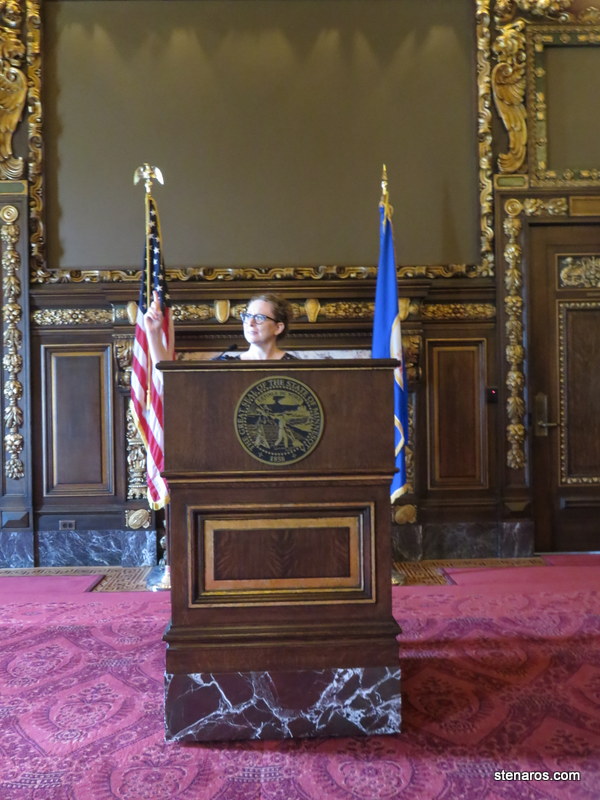
Sara as governor in the governor’s reception room.

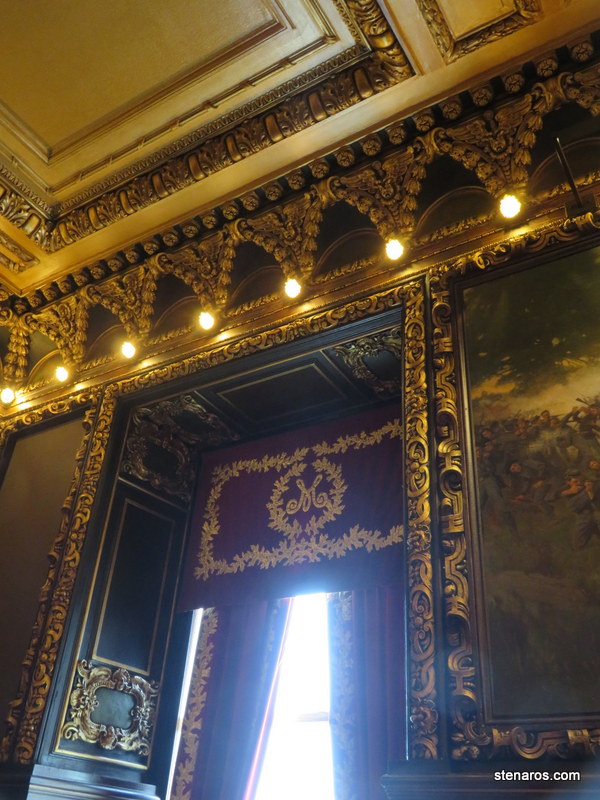
We loved all the guilding and that very ostentatious “M” on the curtains in the reception room. 

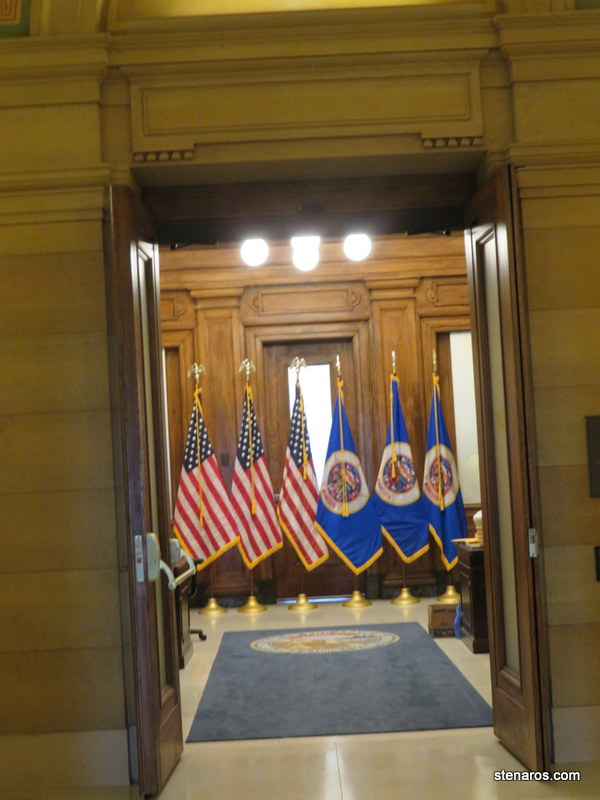
Why have two flags when you could have six?

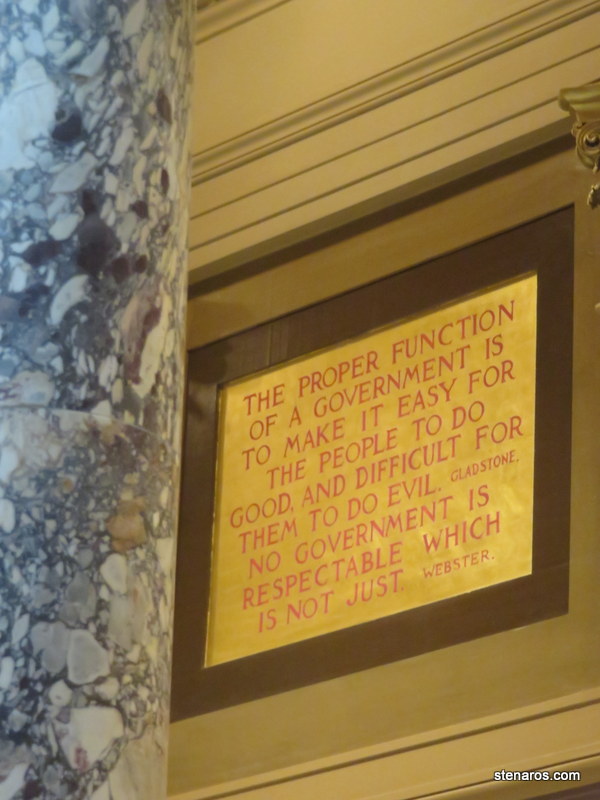
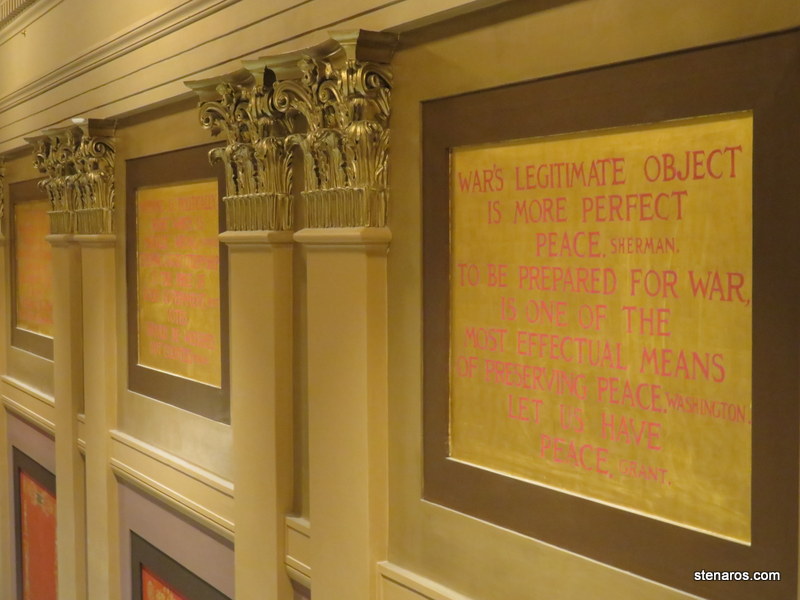
There were quotes about government.

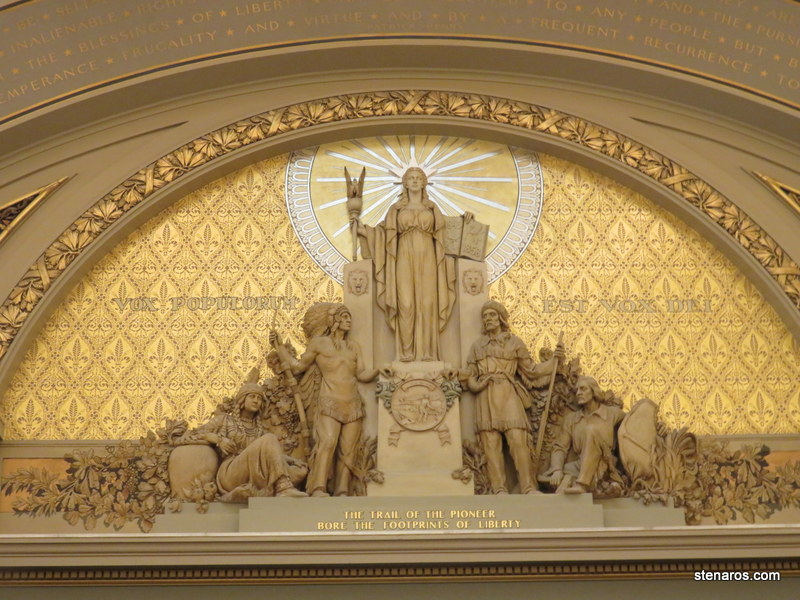
Some good manifest destiny imagery.

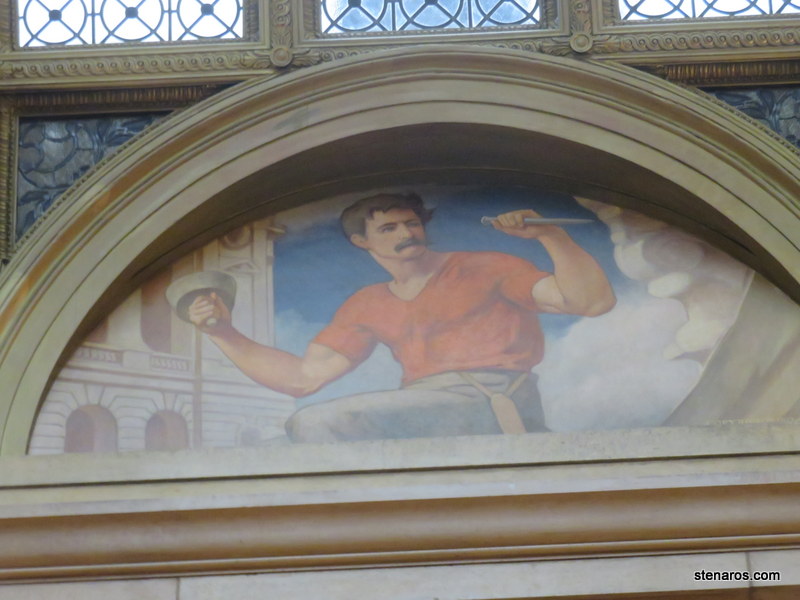
The worker, working away.

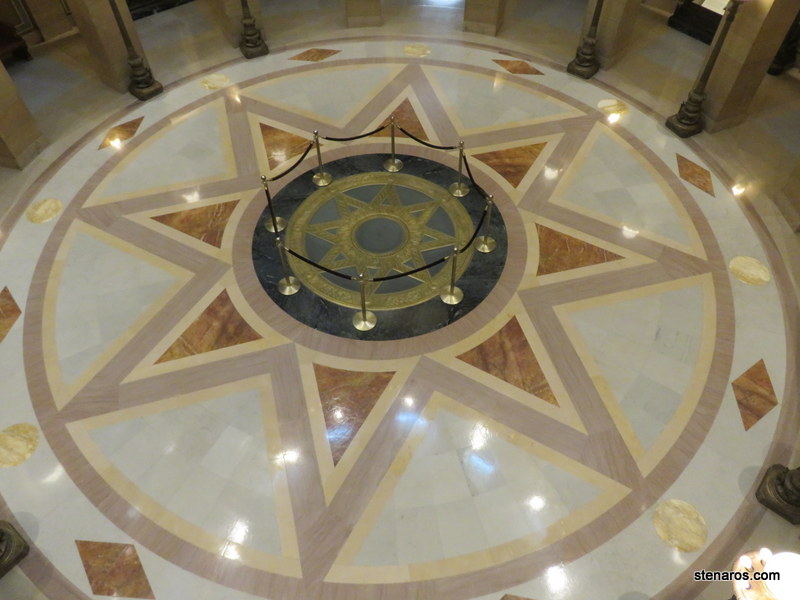
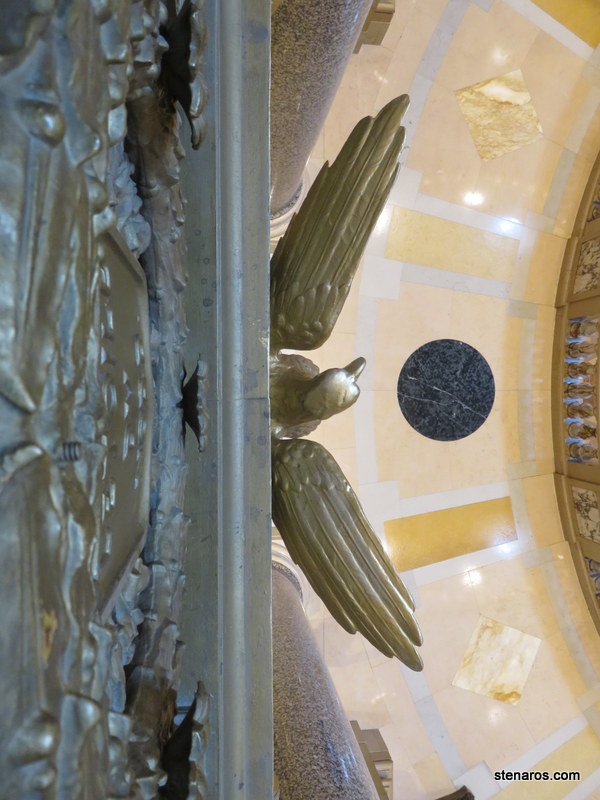
Looking down on the star that is a symbol of the motto “The North Star State.” 

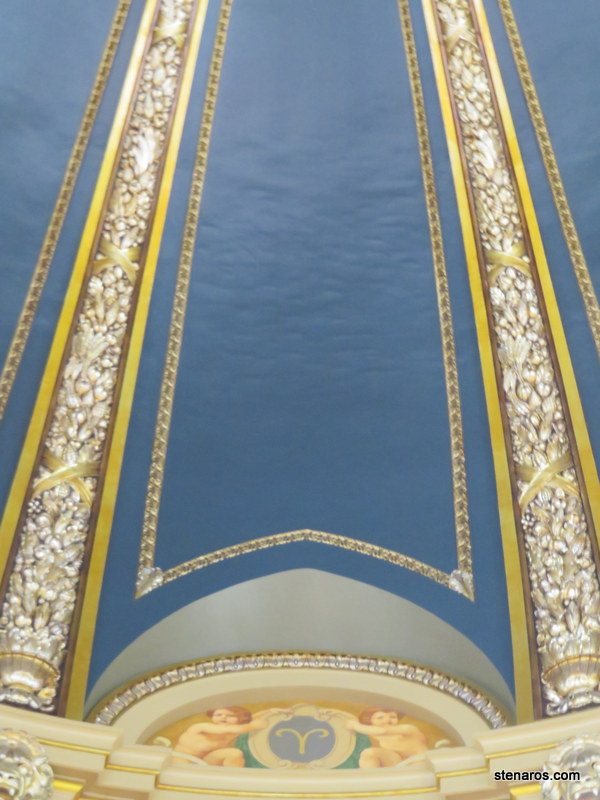
A closer look at the rotunda.  All the detail!  Such a good color of blue!

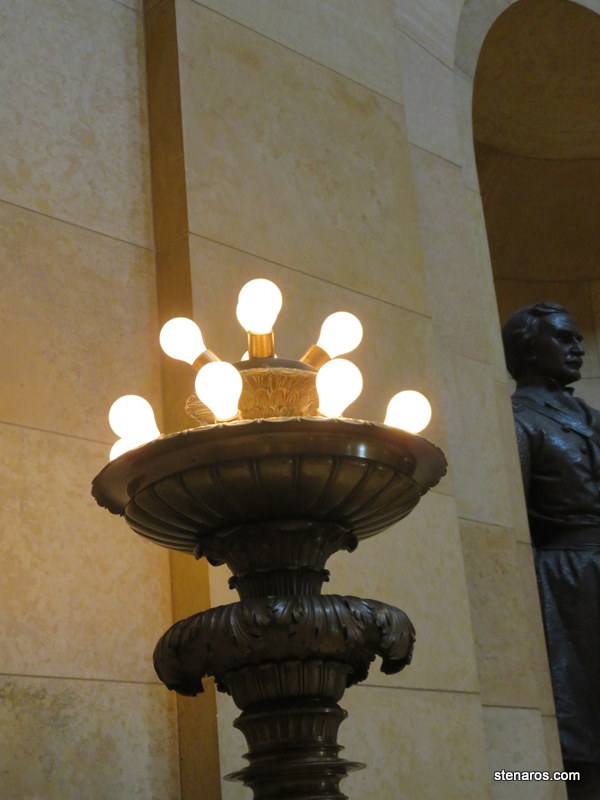
These lights were very fun.

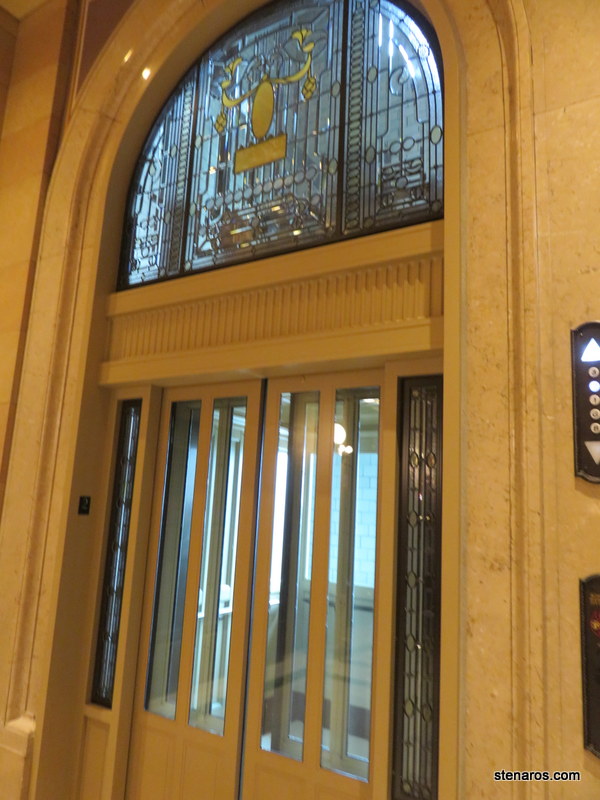
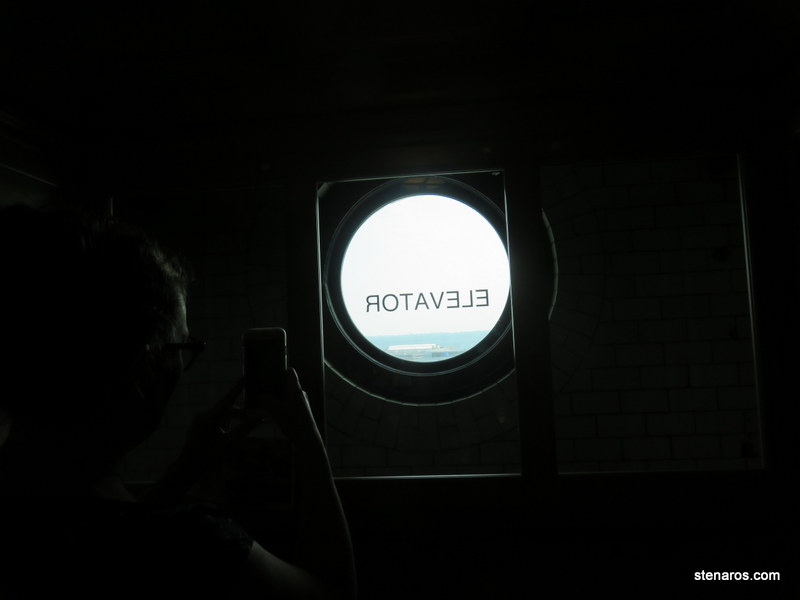
Sara and I rounded a corner and spotted this elevator.  We both gasped in delight.  It was so beautiful!

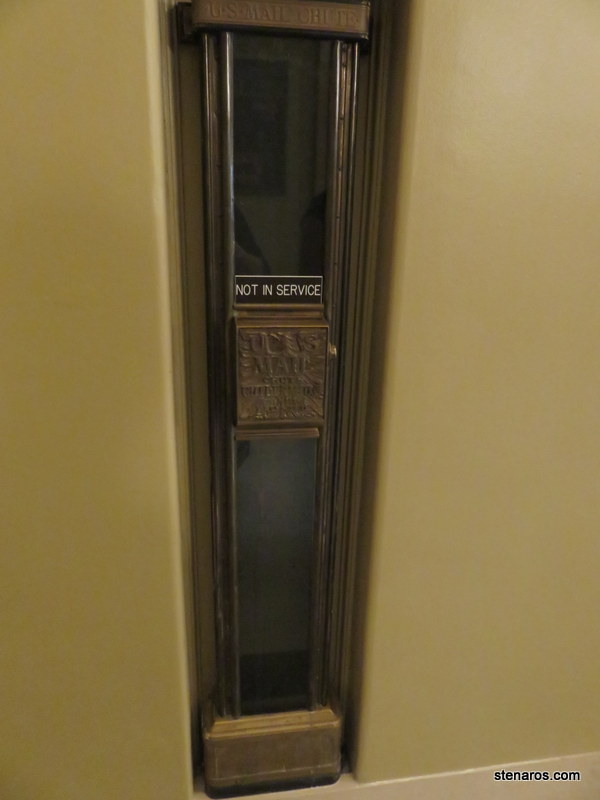
The mail slots were still there, but alas, no longer usable.

We looked at all four of the season murals.

Looking down to the main floor.

One of the most interesting thing about this capitol building was that it housed not only the governor, House and Senate, but also the Supreme Court.  I feel that this is an unusual setup.

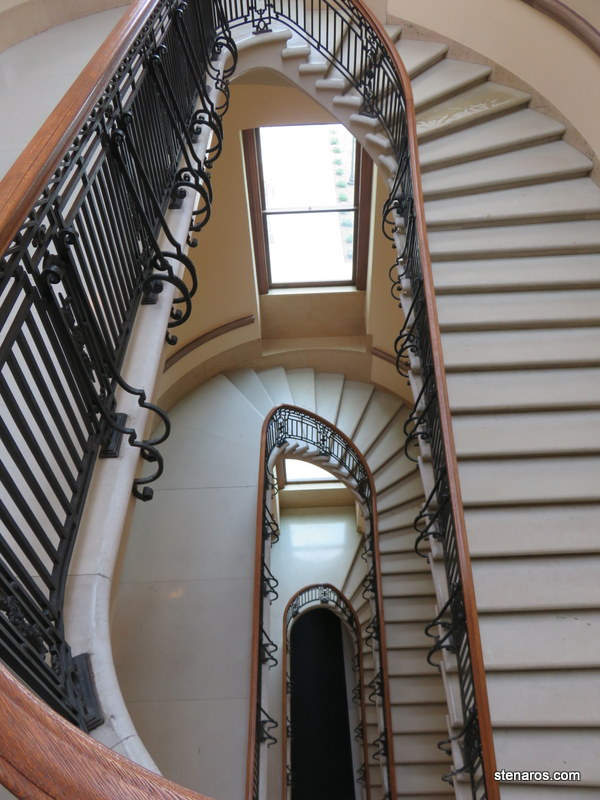
Great staircase.

More quotes about government. 

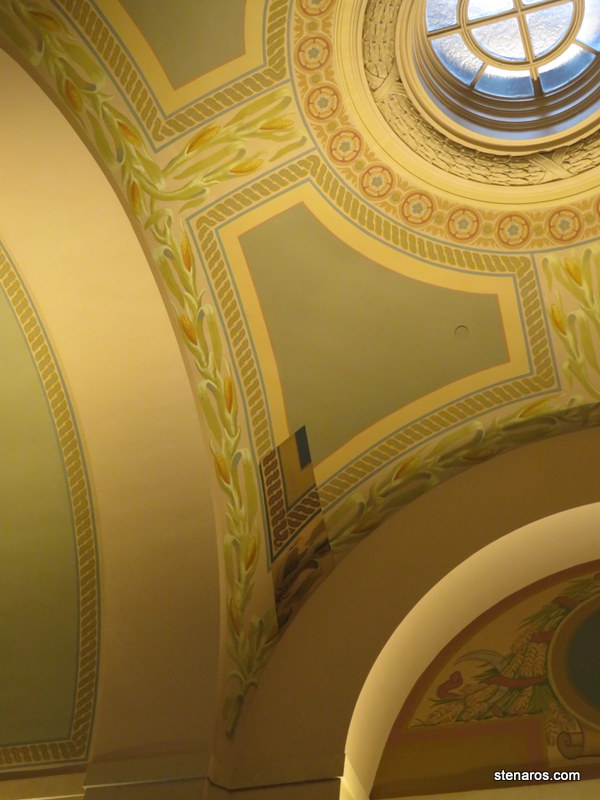
Here’s what the murals looked like, before the restoration.

We took the fabulous elevator down to the basement, where we were delighted to find…

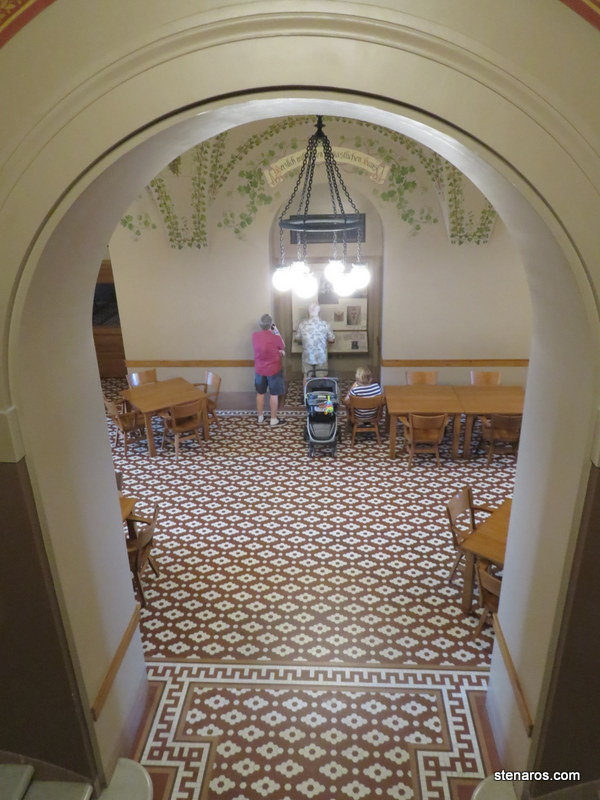
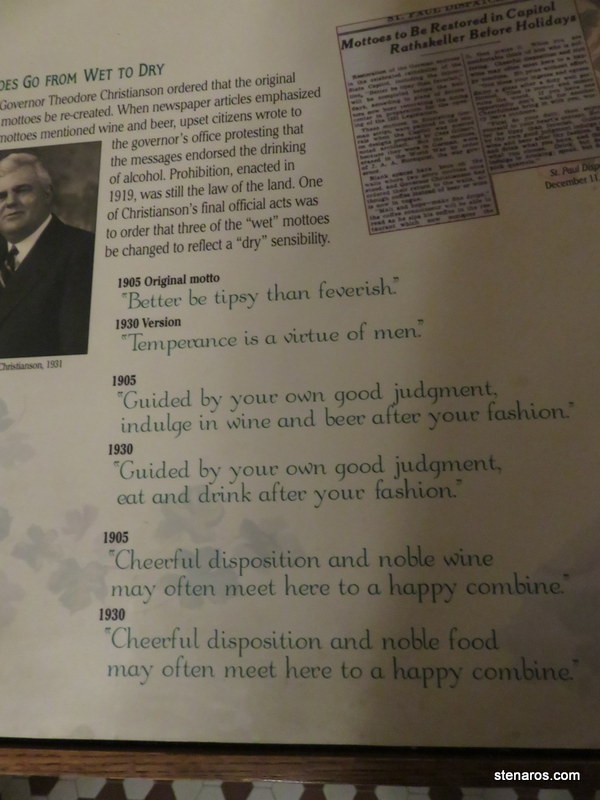
The Rathskeller Cafeteria.  It was designed in the style of a German Beer Hall and included fun mottoes written in German, along with small animals painted on the walls.

Here are some of the mottos and how they were changed during Prohibition.

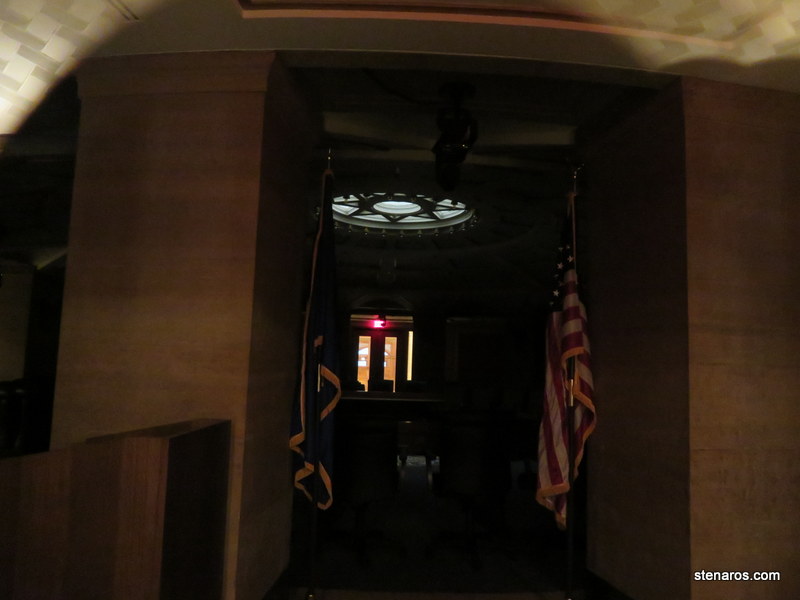
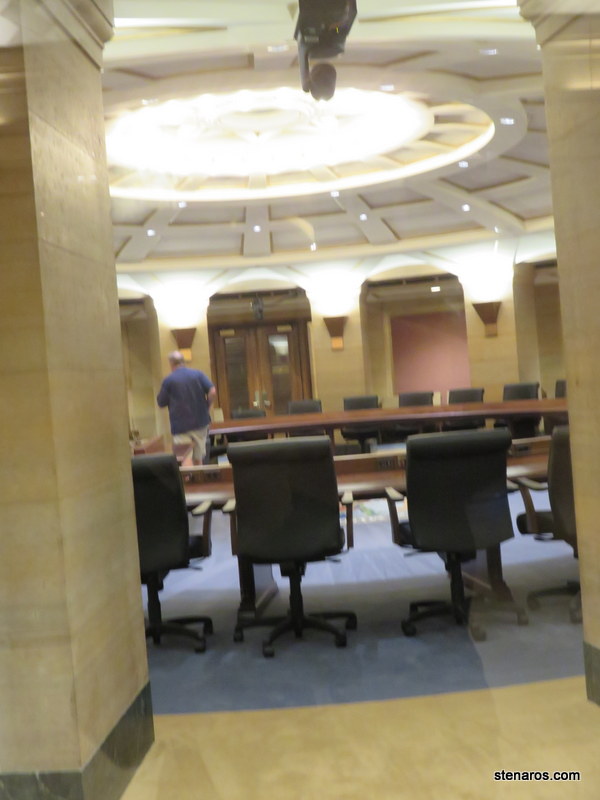
We also found the media area, located right under the star below the rotunda. When we looped back around, there was a man vacuuming, so we got to see it lit up.

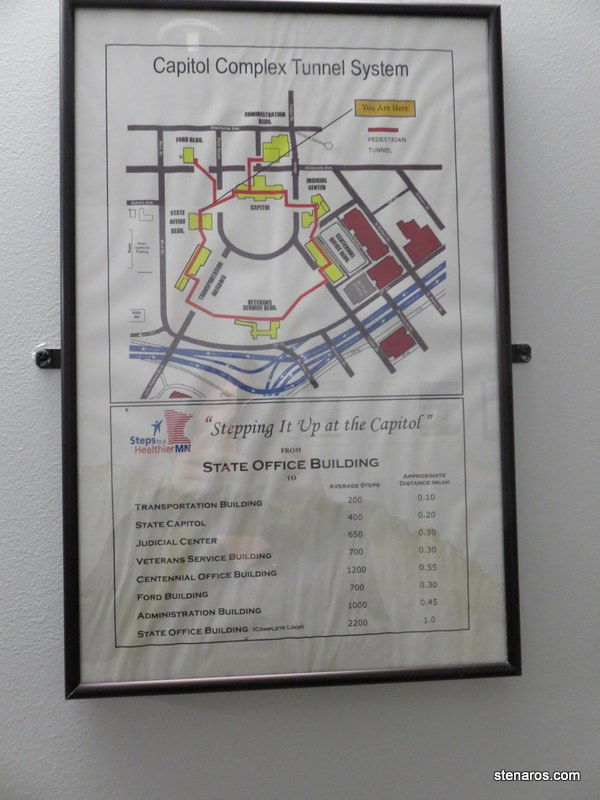
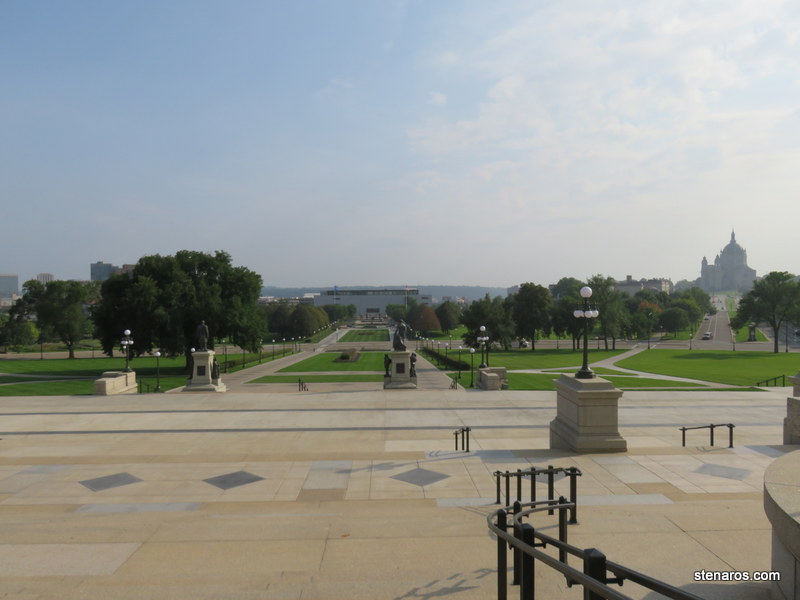
It’s not surprising that chilly Minnesota has an underground tunnel system built into its physical plant.   We could have walked the whole loop, but opted for a trip to the Senate Office Building and back. Aside from having a good capitol building, they also had an impressive amount of grounds.

Campus Wander

Sara had an interview today on the University of Minnesota Campus, and so I wandered around until she was done.  Here are some things I saw.

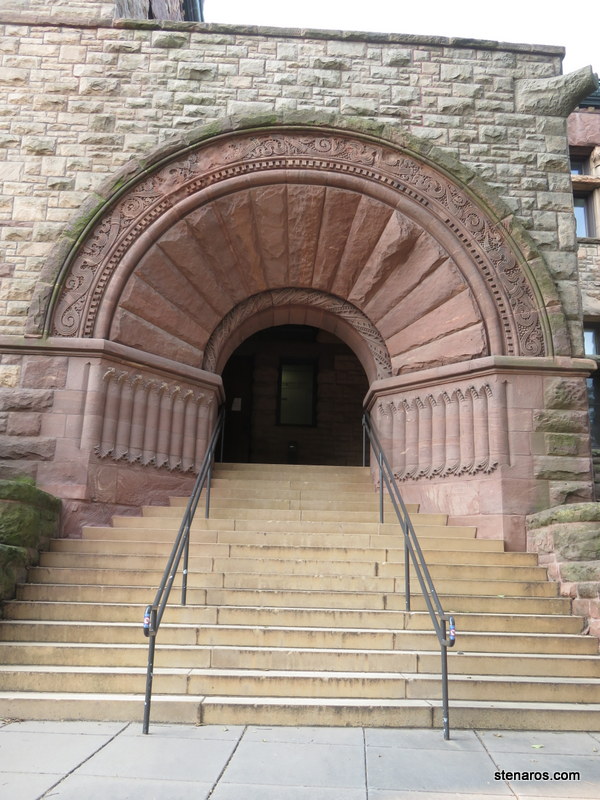
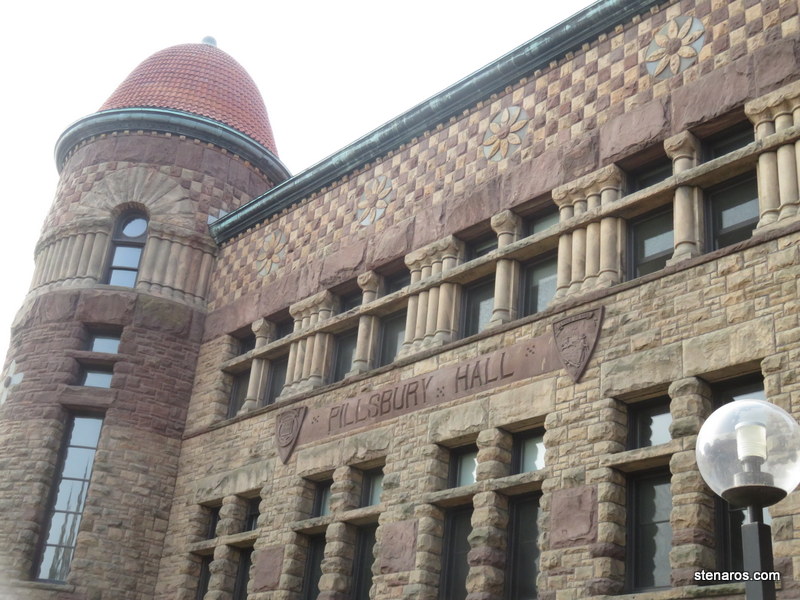
Man, the Richardson Romanesque of this campus?  Amazing.  So many good details. 
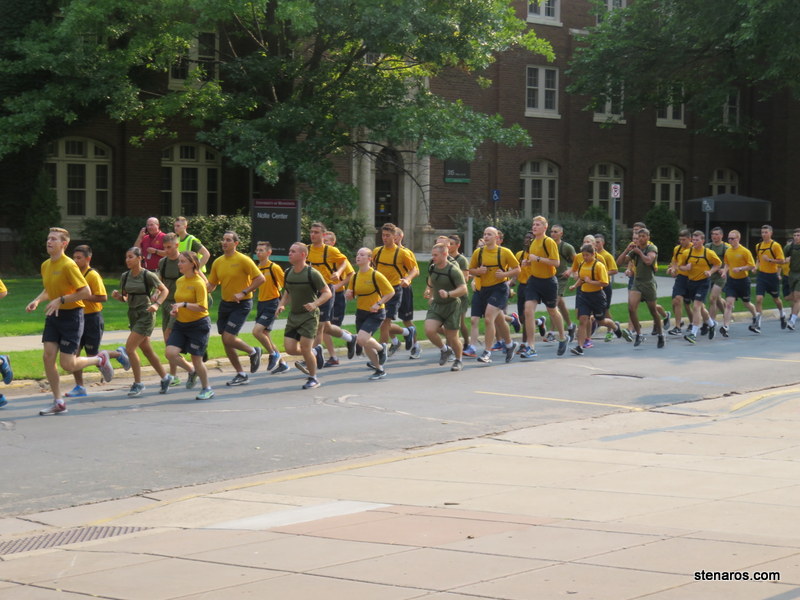
I heard this group coming long before I saw them.  I’ve never been in the kind of running shape to run with a group, but this looked fun.
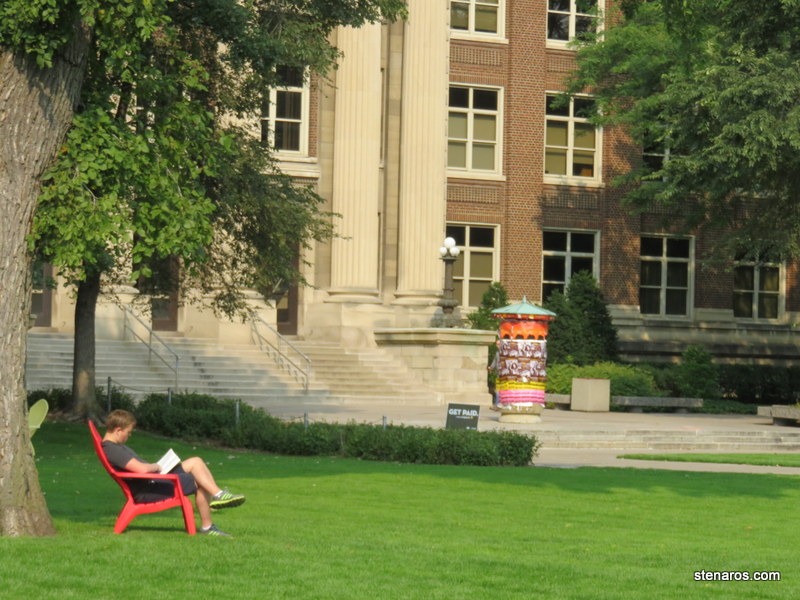
There’s a big mall/quad area that has these red Adirondack chairs scattered around.  Quite lovely.
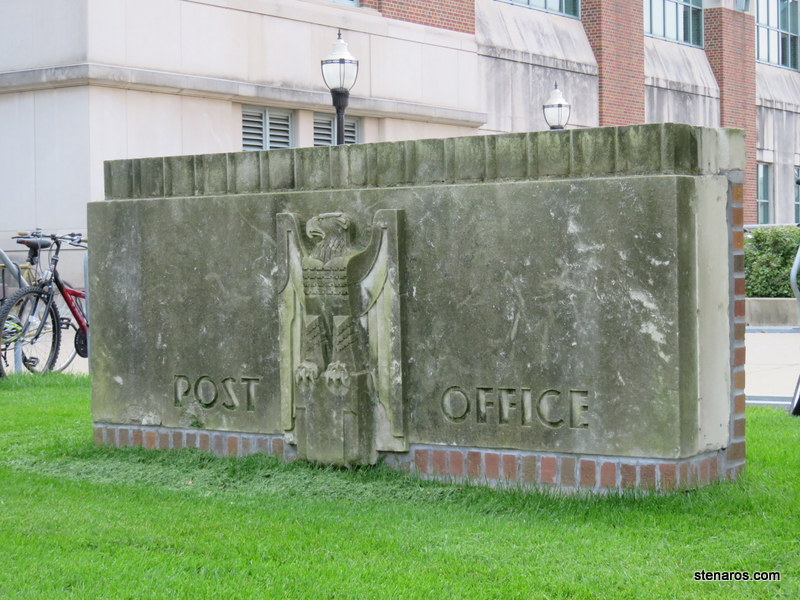
Outside Coffman Memorial Union was this formidable sign.
I wandered around Coffman Memorial Union. It’s the student union. They had this great photo of TV time in the (presumably) 1950s, or early 1960s.
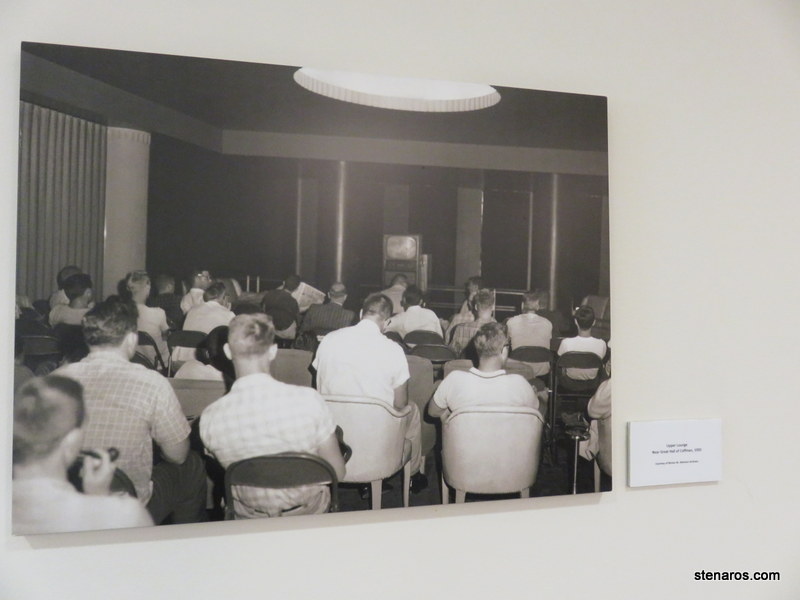
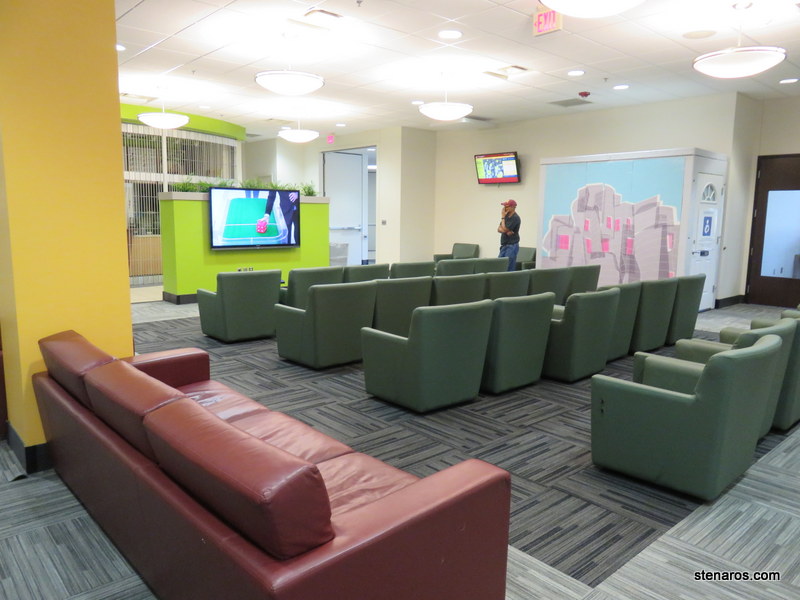
And look, you can still have TV time today.  I would bet there is a lot less newspaper reading, though.
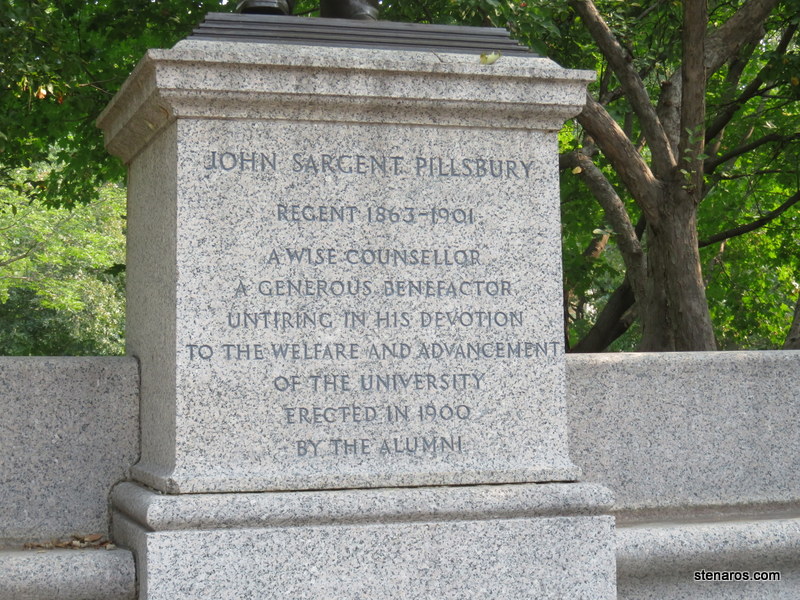
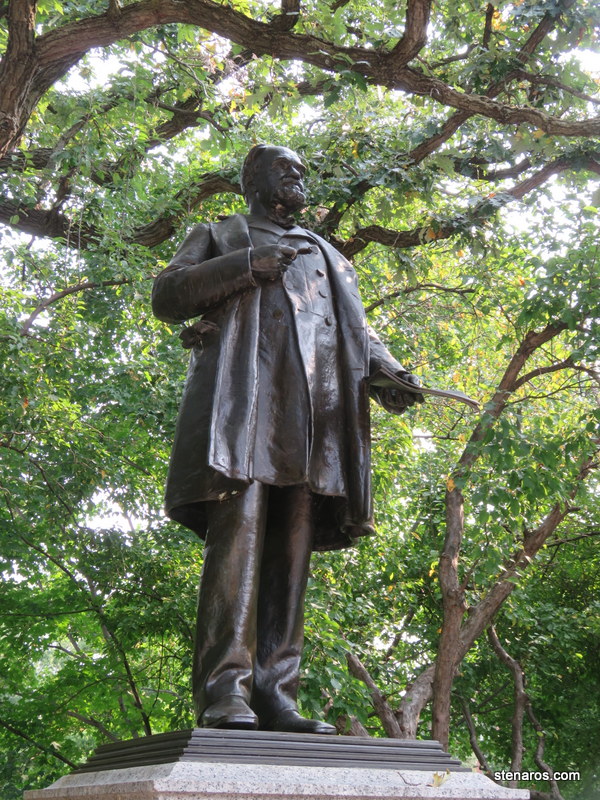
I hung out with John Sargent Pillsbury for a while.
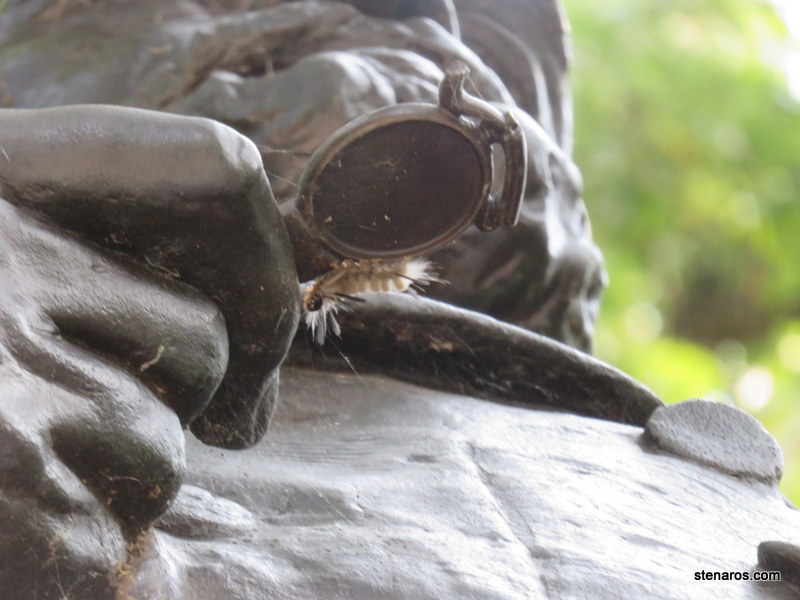
I wasn’t the only one hanging out.
I enjoyed this person following the rules of the sign.
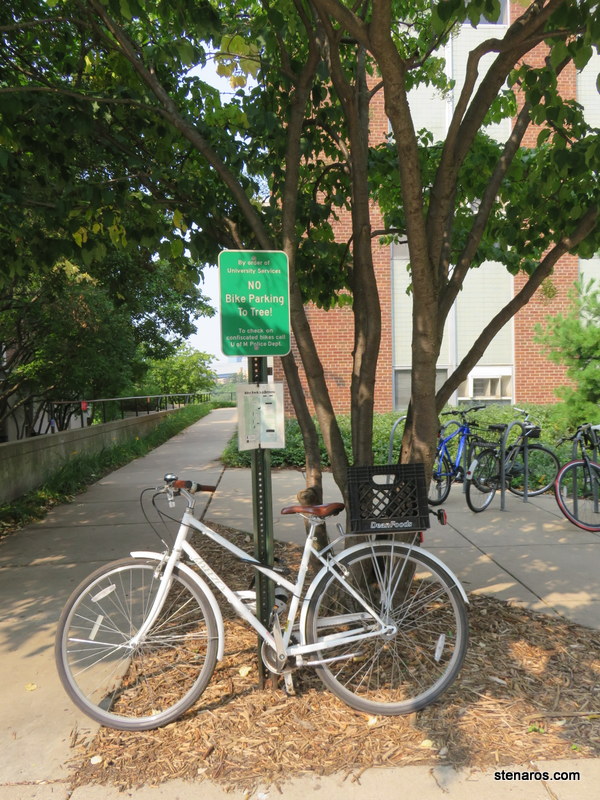
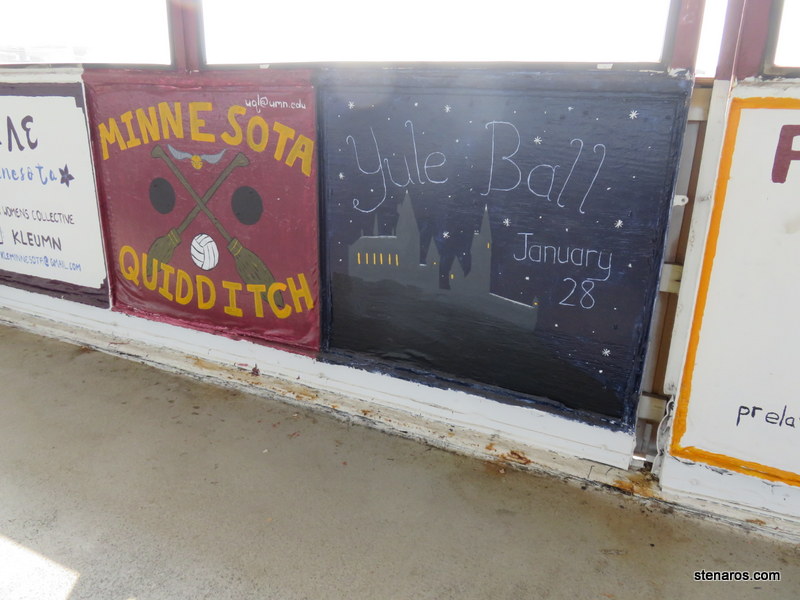
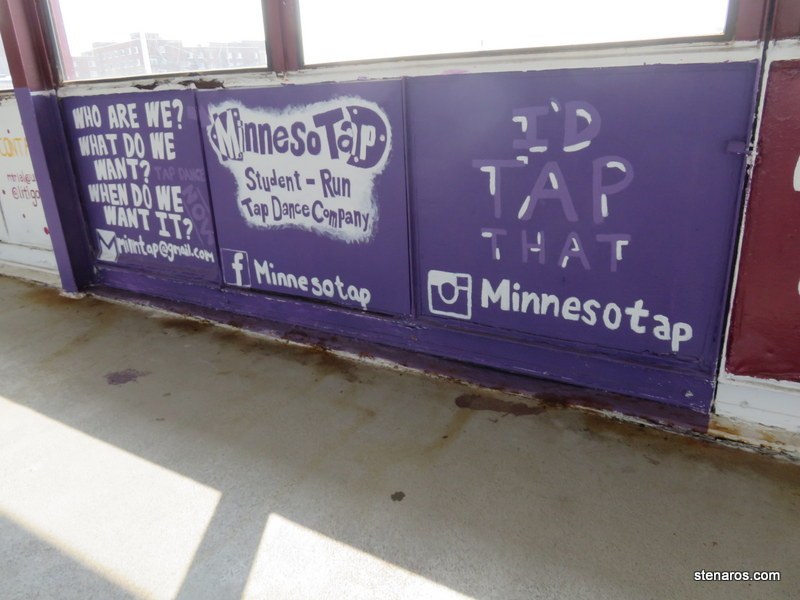
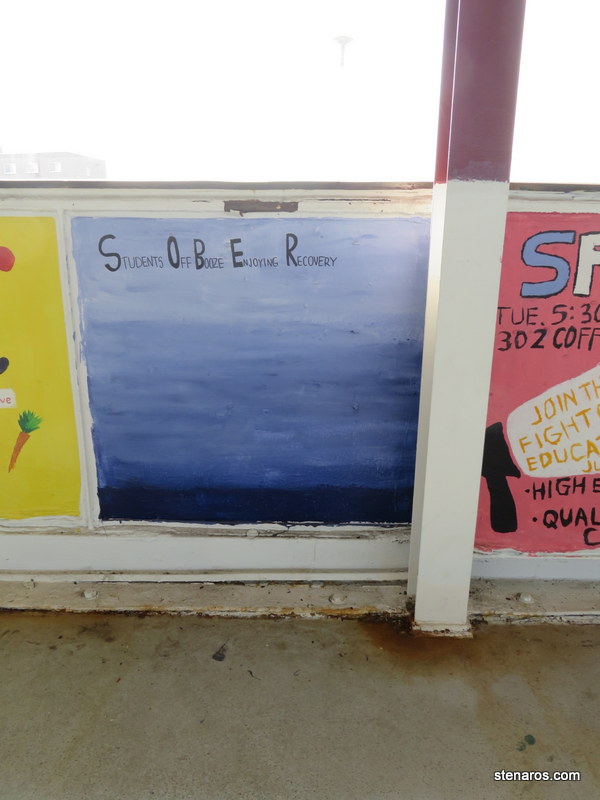
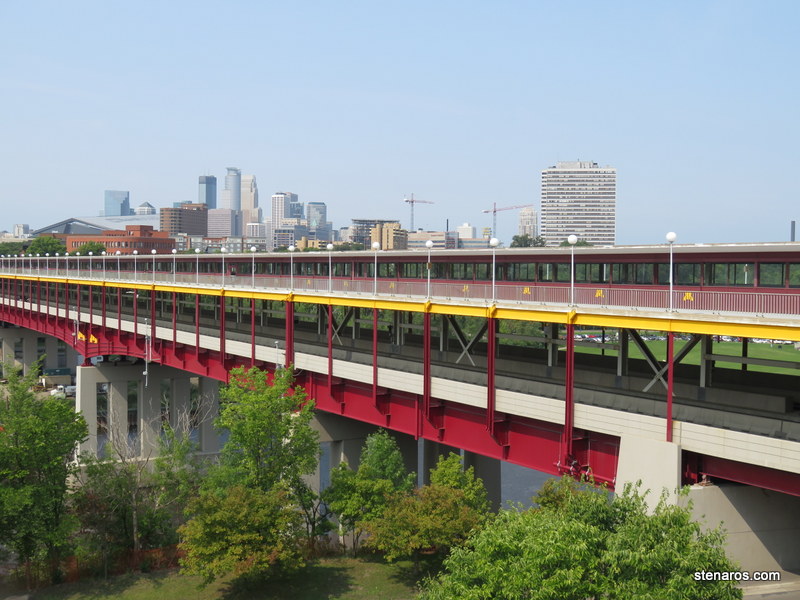
Sara & I walked across the Washington Avenue Pedestrian Bridge.  It crosses the Mississippi and joins the East Bank of Campus with the West Bank of campus.  And! The student clubs paint ads in it.  Here are some of my favorites:

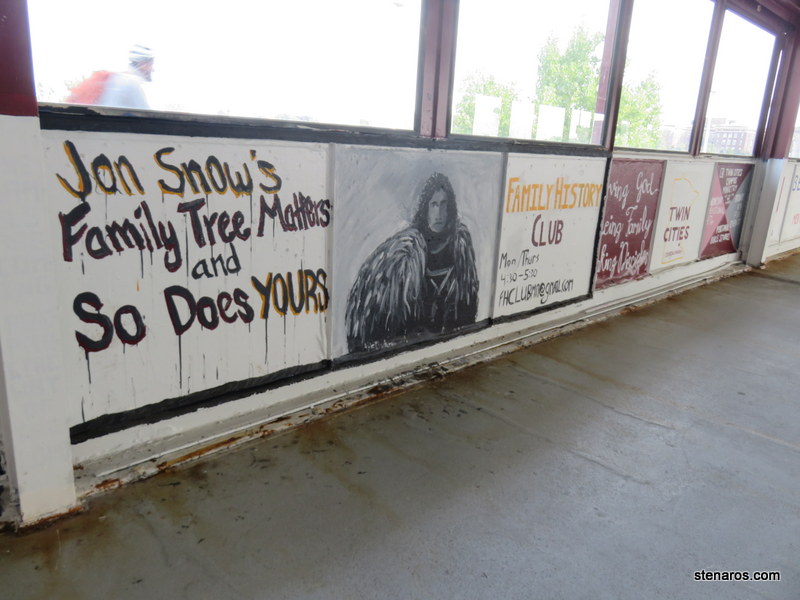
Game of Thrones was a theme in many ads.
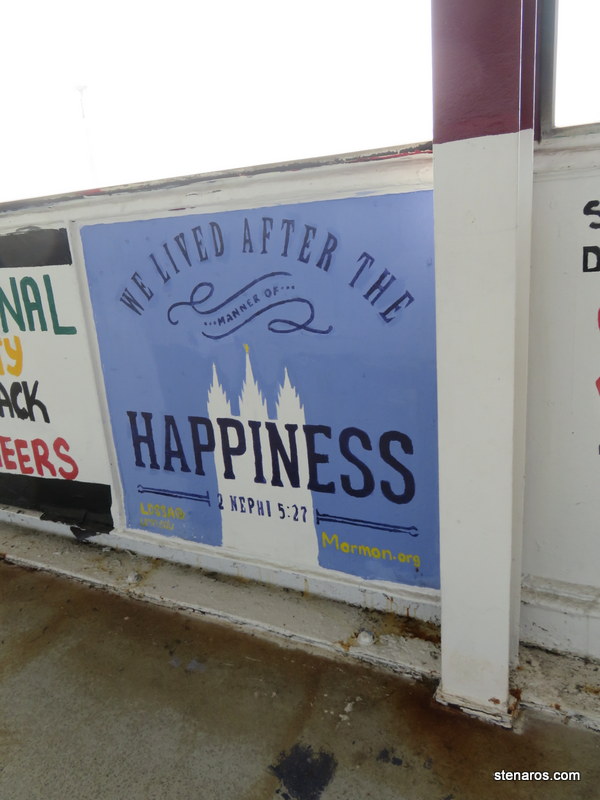
Being formerly Idaho girls, we easily spotted the Mormon club.
It’s always good to have a good artist in your club.  Then your panel looks better.
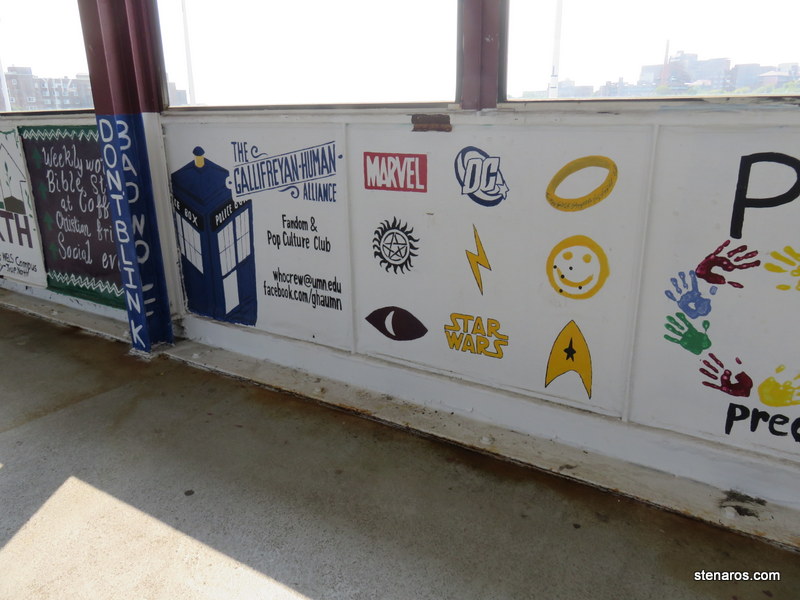
Quiddich and a Yule Ball? Amazing!
And, oh my gosh, if this club had existed in my college days, I would have signed right up.
You can see that the SOBER club was lacking a full-artist-type person.  But they did a pretty good job with what they had.
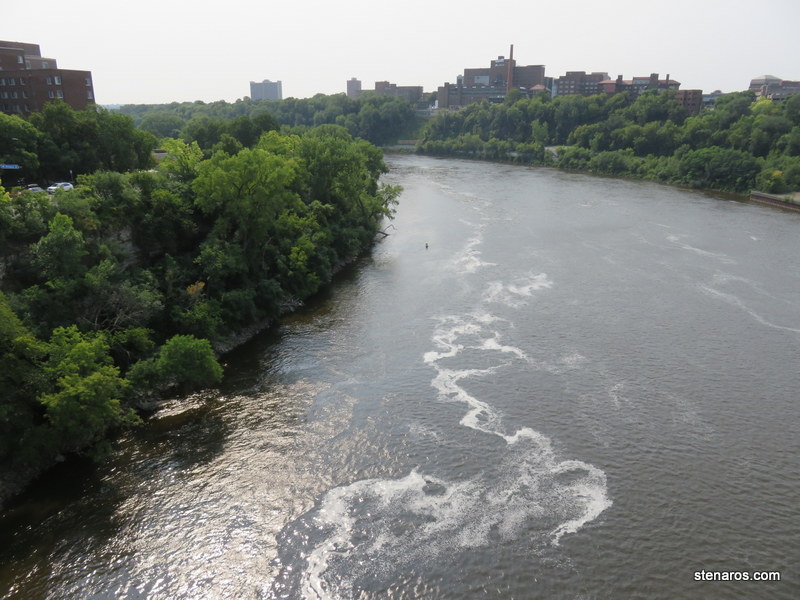
Here she is.  The Mississippi!
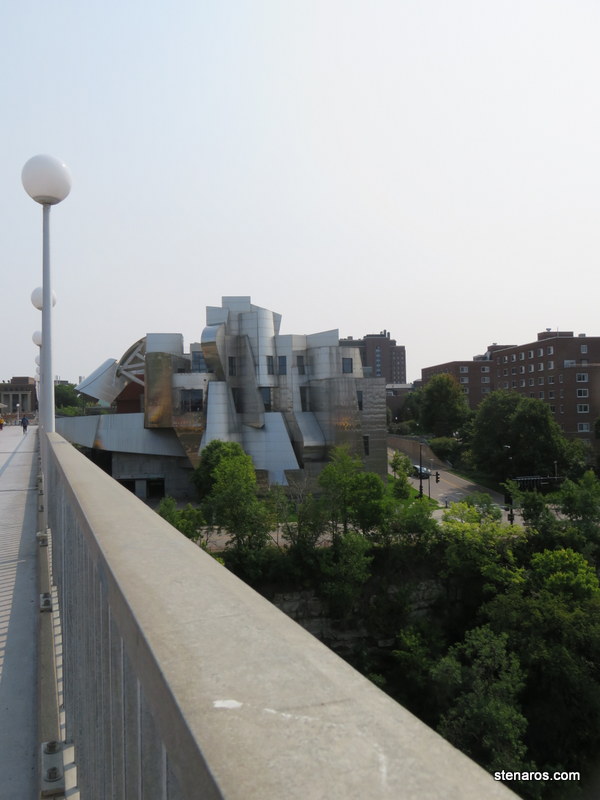
And our next stop, the Weisman Art Museum. 
The museum had some good stuff.  I even found a platter on display made by my friend Sue, who participated in the St. Croix Valley Pottery Tour. That was pretty exciting.

And the Pedicord Apartments?  It rocked my world.  I loved it.

“What is that?” I said to Sara, while pointing.  She gave a shudder.
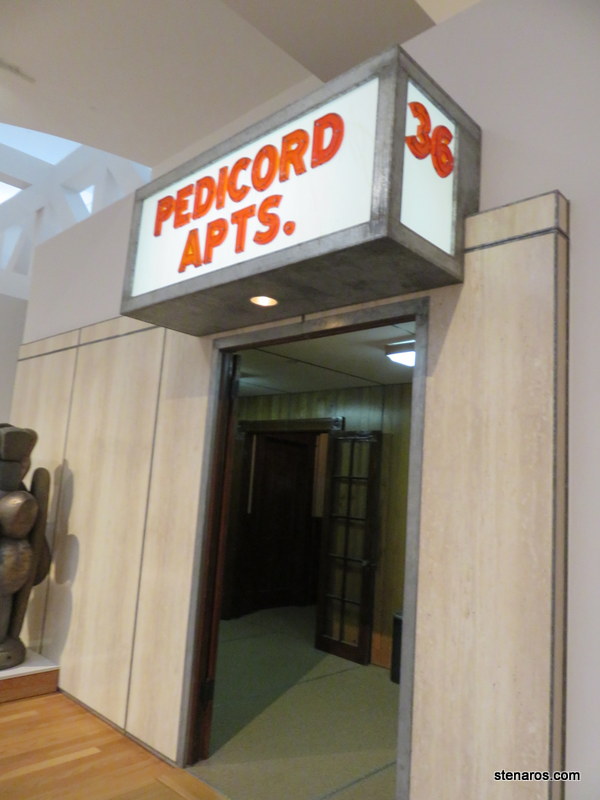
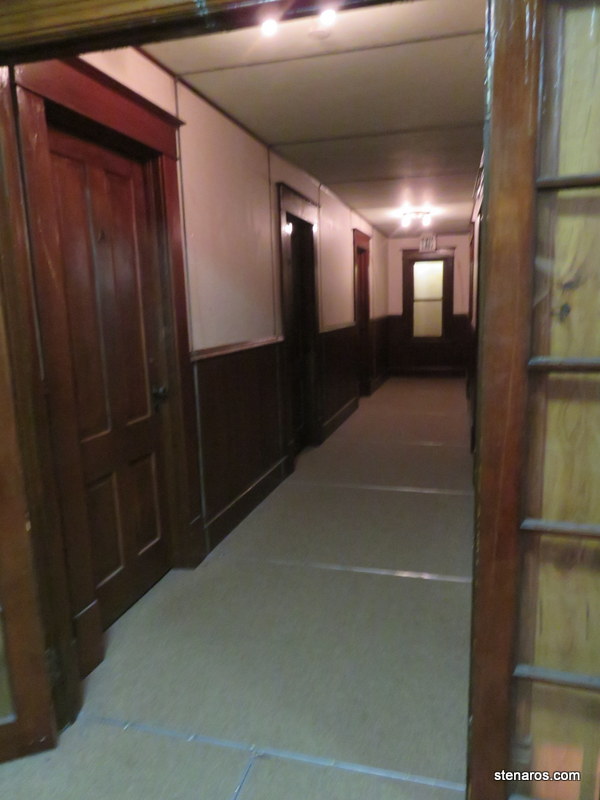
Inside, the hallway was super claustrophobic. The artists had used forced perspective very effectively.  Plus, there was goopy stuff all over the doorways.  I loved it!

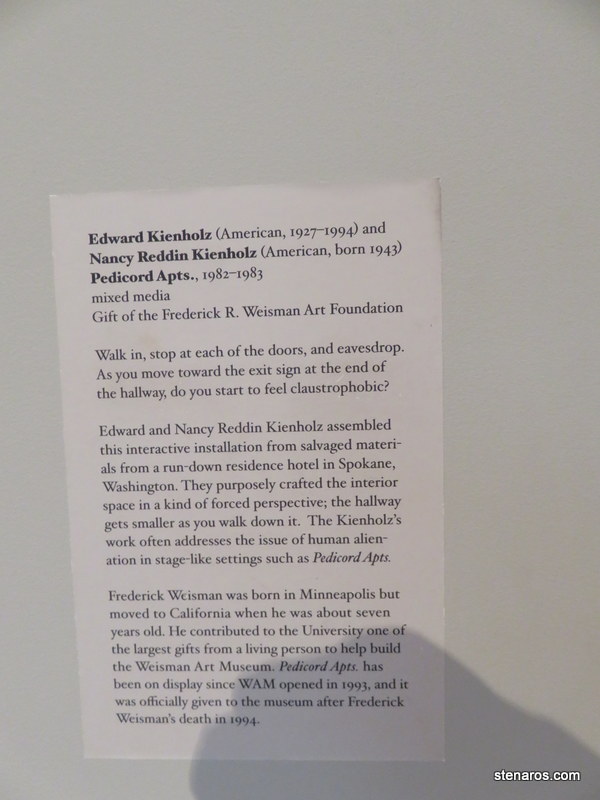
And then I went back out and read the informational sign and it got even better.

When you leaned in to listen at the doors, you could hear what was going on inside the rooms.  Really creepy and incredible.  Highly recommended.  I spent some time figuring out what made the sound start when you leaned into the doorway.
Here is more information about the piece.
From a balcony at the Weisman we could take a picture of the Washington Avenue Pedestrian Bridge.  The light rail runs below the part we walked on.
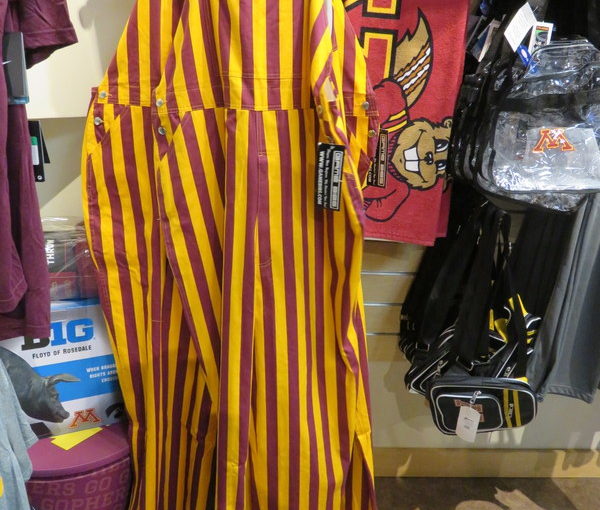
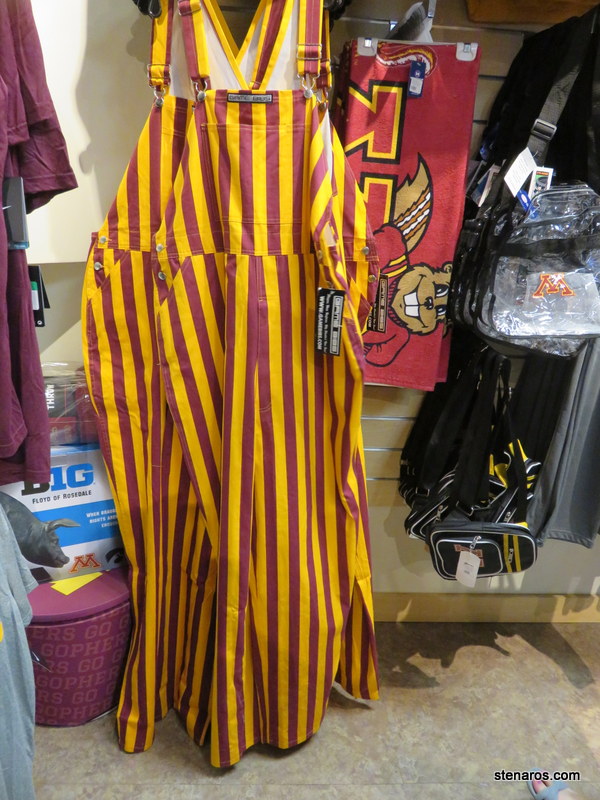
We went in search of postcards, which afforded me this picture of these overalls, worn by enthusiastic students to games.  Earlier in the day, at the campus bookstore, I watched a guy trying a pair on.
Getting home from the Eclipse

And here’s where I should have kept to what I had planned. 

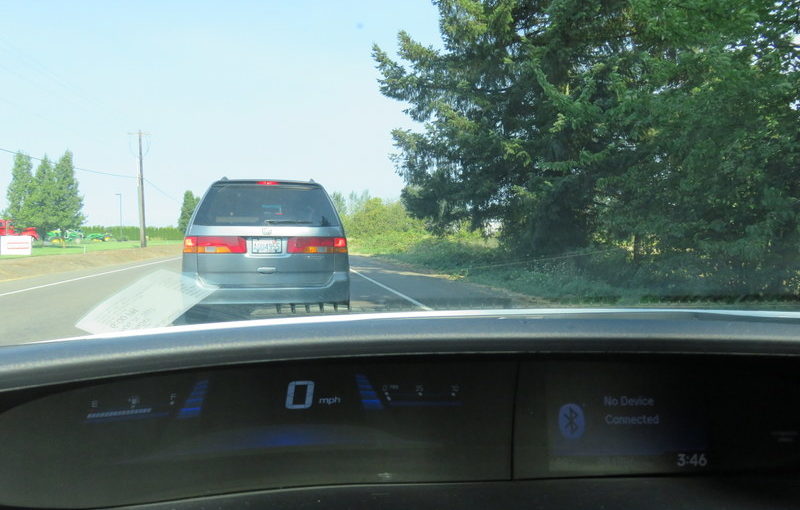
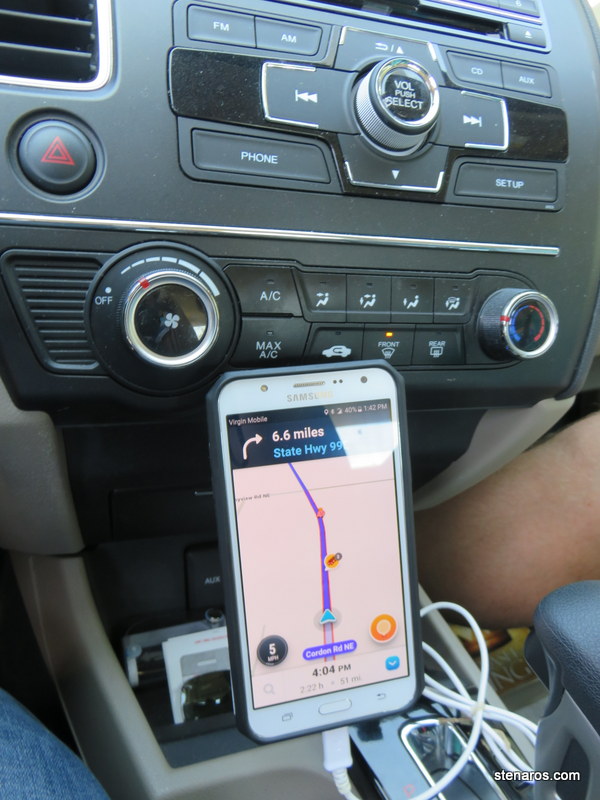
Instead of following the Oregon Bikeways path between Salem and Champoeg, we made the mistake of using Waze.  Waze kept wanting to put us on the freeway.  Unfortunately, every entrance to the freeway had very long backups.  We would wait for a while and then Waze would re-route us further south, to wait in another long line for the freeway.  We did this four times, never actually reaching the freeway, before I called, “Uncle,” we stopped at a truck stop to have a mediocre meal, and I took over the navigating.

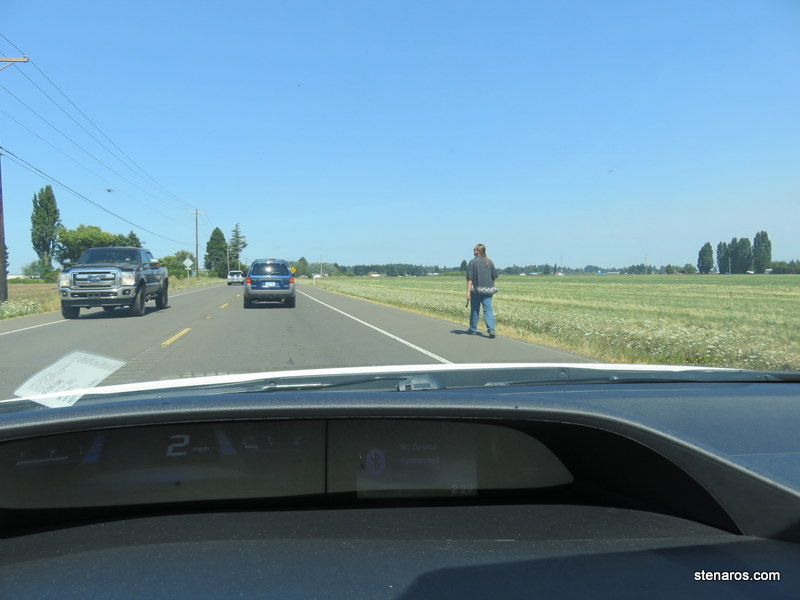
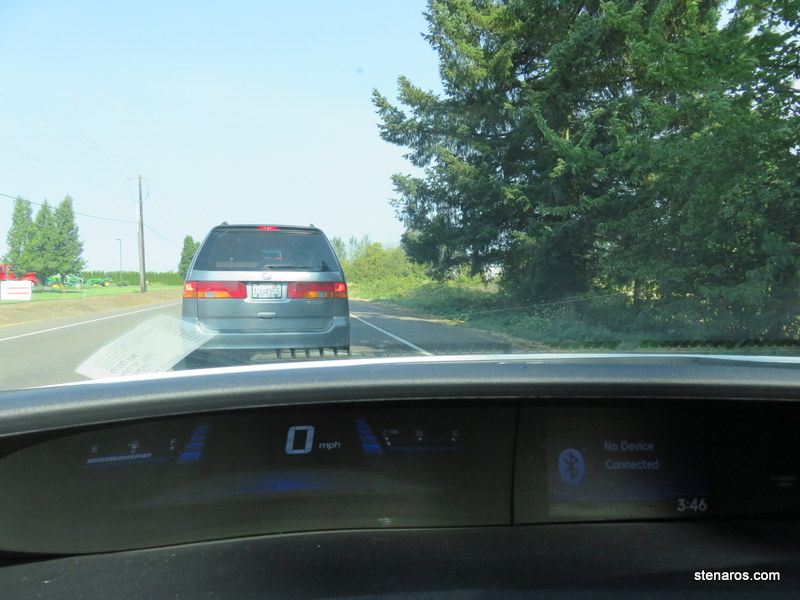
This man was walking faster than cars were moving.

There was a lot of this:

I didn’t keep track of what time we left Salem, probably 1:15-1:30 pm. After the truck stop, I used Google Maps and chased the roads that were green.  It meant we went out of our way, but at least we were moving.  Once we got far enough north on back roads, we easily popped onto the interstate and had a quick trip home. But overall?  Probably five hours in the car.  It took us an hour to get there.

Still totally worth it.

Matt as the Oregon governors

After the eclipse, I stood in line to have the letters and postcards cancelled, and then we took a self-guided tour of the capitol.

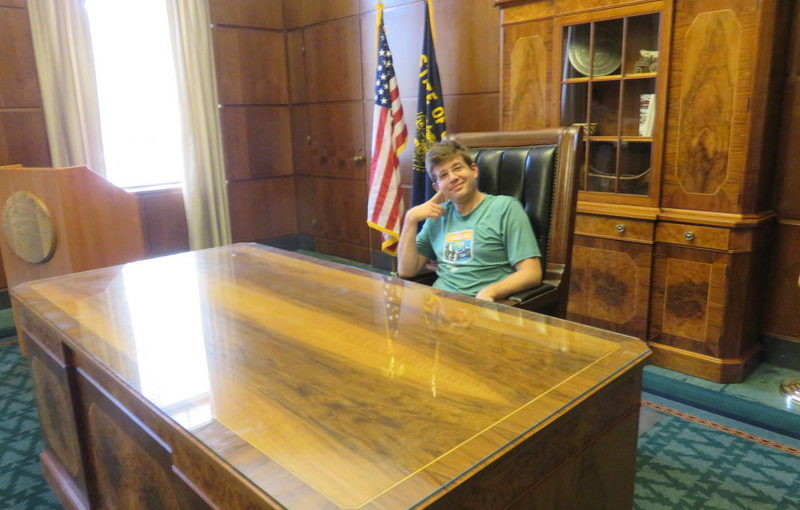
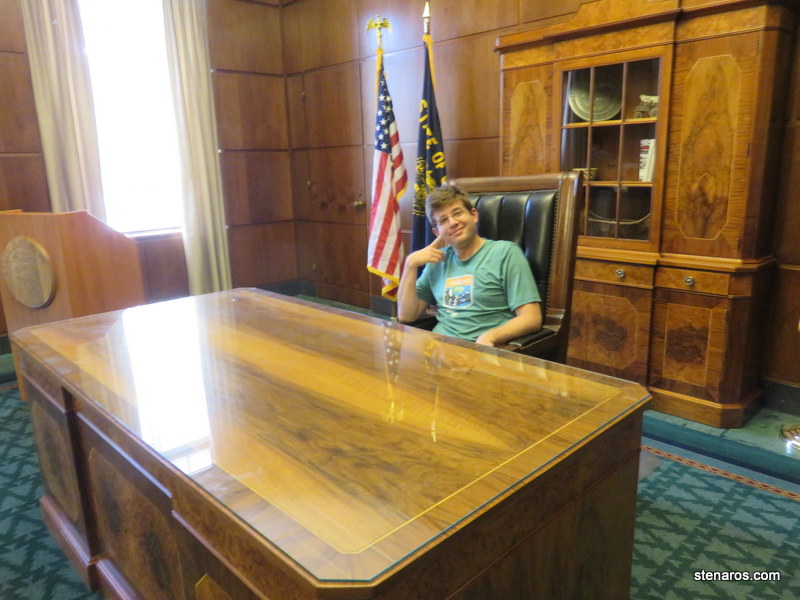
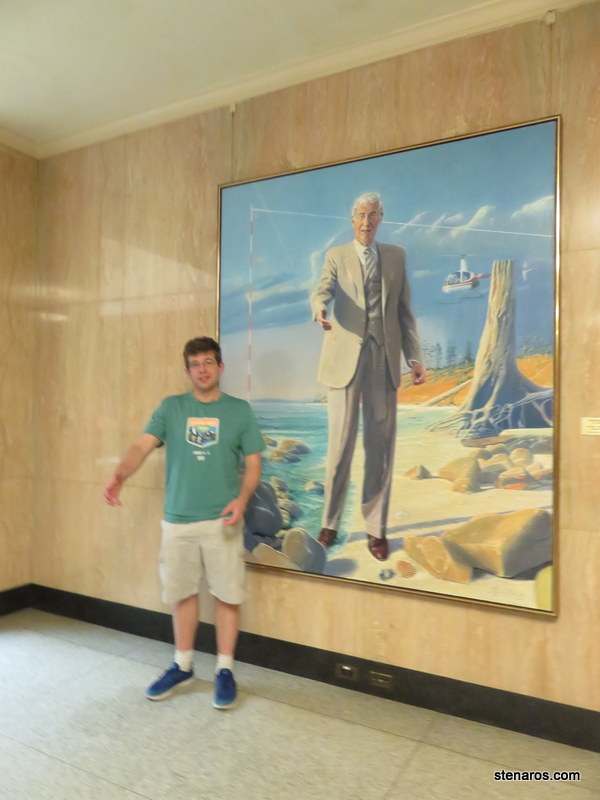
Here’s Matt, sitting at the governor’s desk.

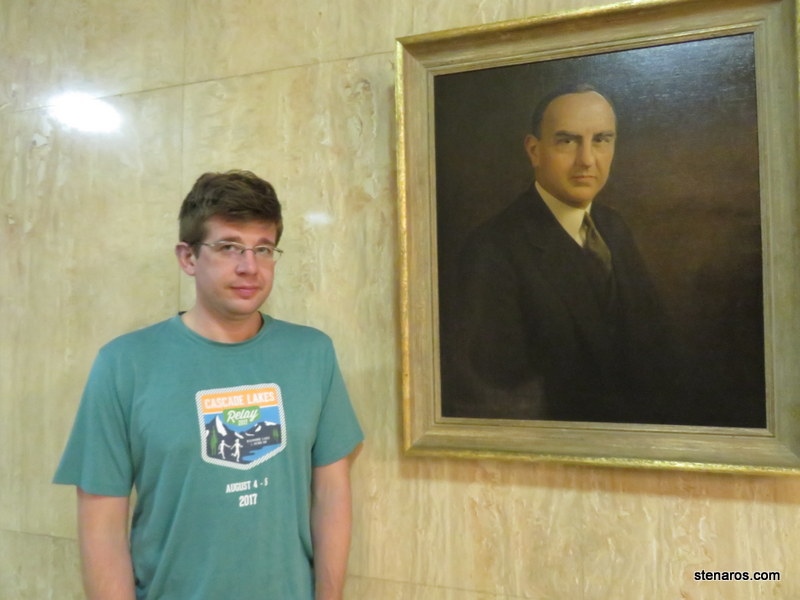
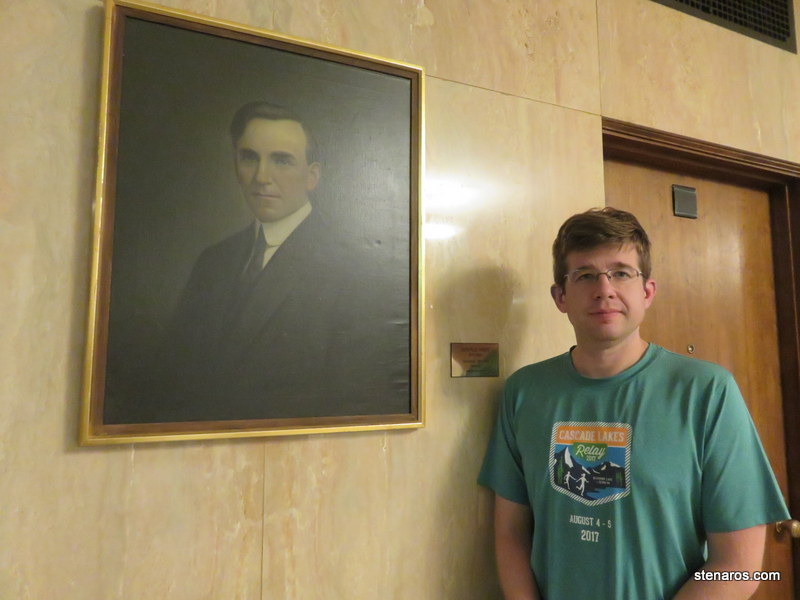
And now let’s see Matt as the governors.  As Theodore T. Greer:

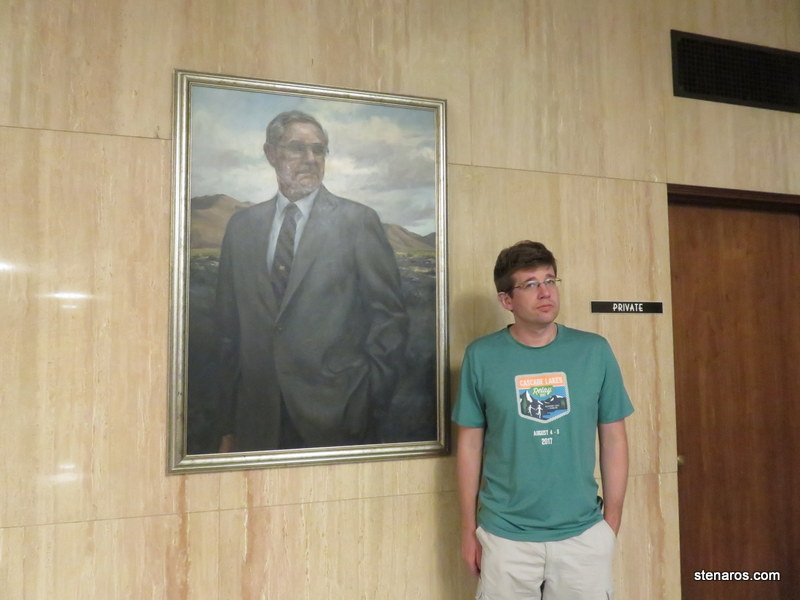
As Julius Meier: (note that after that first picture, I neglected to take photos of the name plates, and there is not a convenient State Capitol Virtual Tour of all the portraits.  So I’m matching faces to Wikipedia entries, especially for the pre-1960’s governors.  Feel free to suggest corrections.)

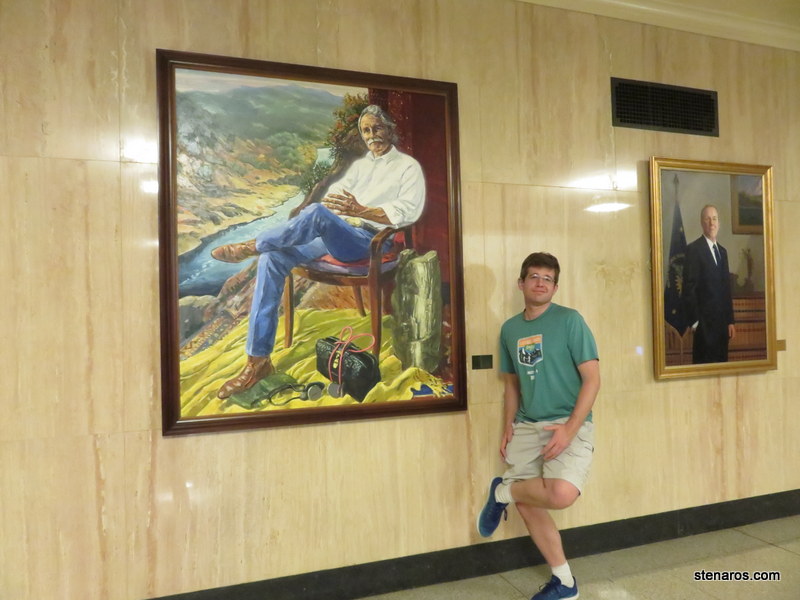
As Oswald West:

As Vic Atiyeh:

As Ted Kulongoski:

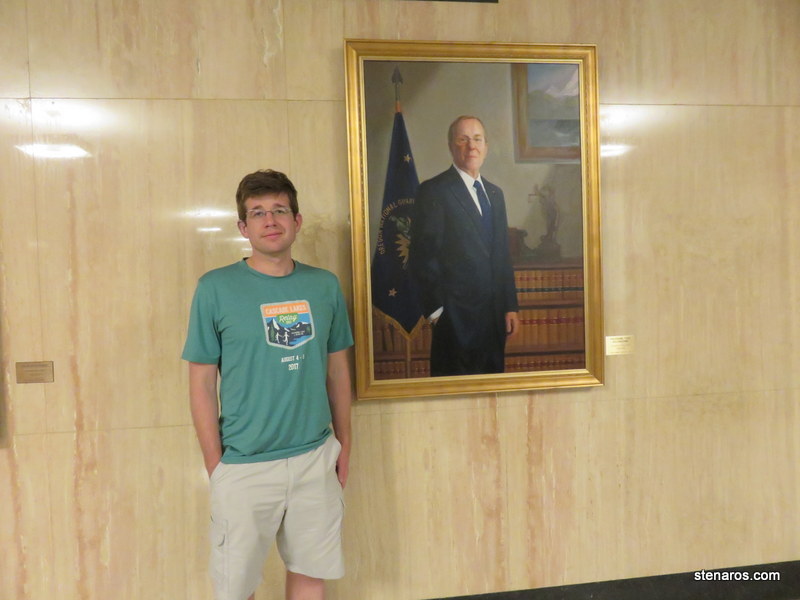
As John Kitzhaber:

As Tom McCall:

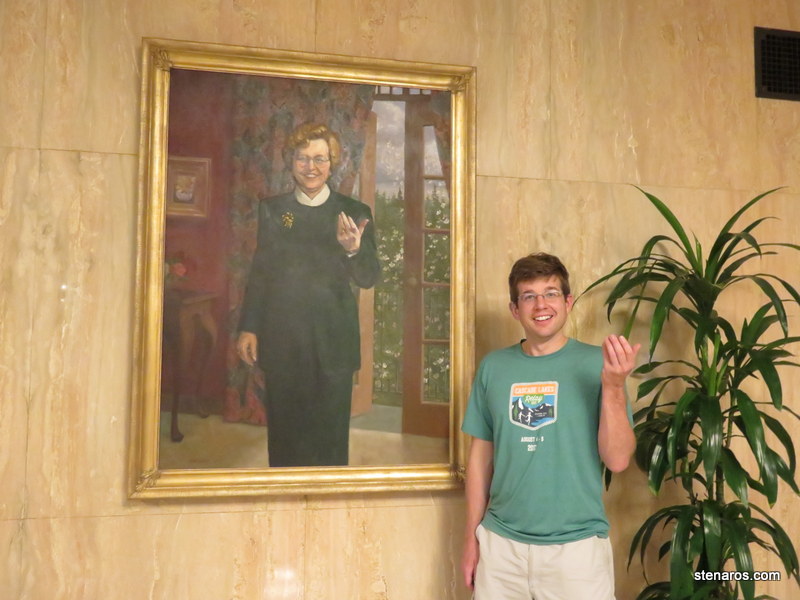
As Barbara Roberts:

As Bob Straub:

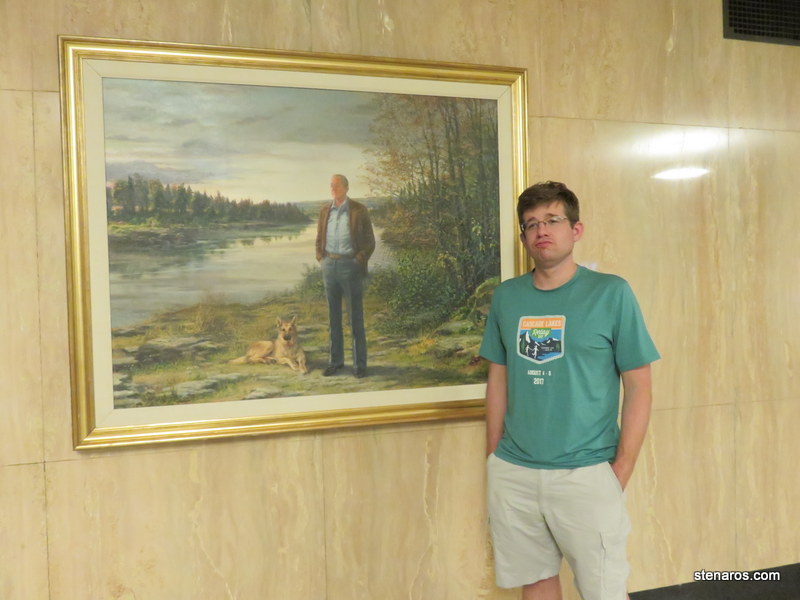
And also as the dog:

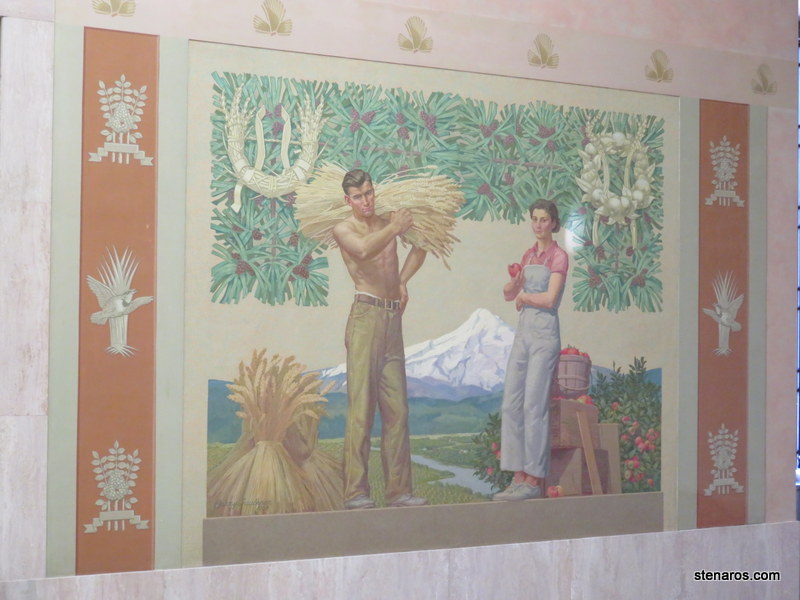
I was quite taken by this very large mural of a good lookin’ shirtless guy.  Who was that guy?  Why did a shirtless worker make the cut for official statehouse murals? 

Matt’s birthday is celebrated

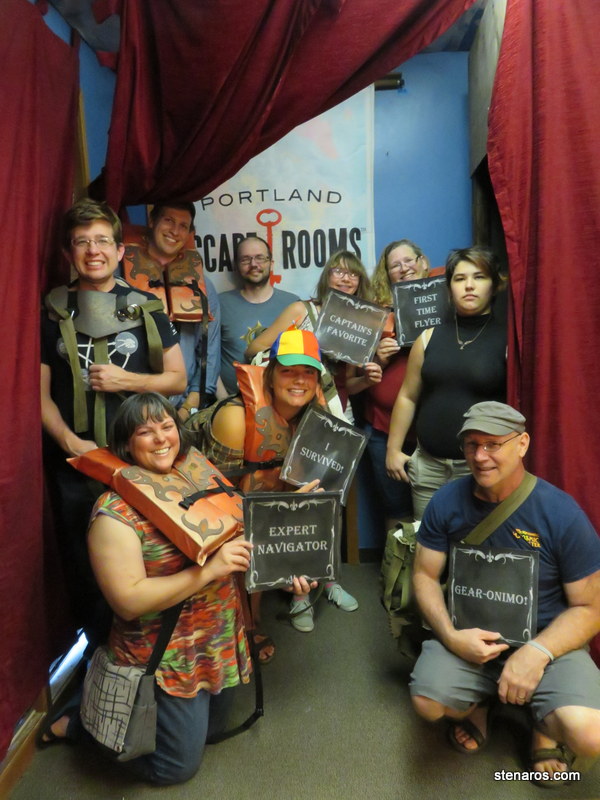
Matt wanted to do an escape room for his birthday, so we visited Portland Escape Rooms for their Steampunk-themed escape. We made it out of the dirigible (although we did neglect to find that last life jacket for the captain.  He said he was fine to go down with his ship)

Matt, myself, Greg, and Burt joined five other people we hadn’t met to conquer the various puzzles presented to us.  This room had a reset factor, which kept everyone occupied the entire time.  Whenever people were standing about, the costumed actors would tell us the flux-capacitor (or whatever it was) needed to be adjusted. I quite liked this as it eliminated the need to beat previous teams’ times.

It was also my first time with employees as characters in the room.  They were very fun.  This was an improvement over the guy who sat in the room with us, but was not a character.

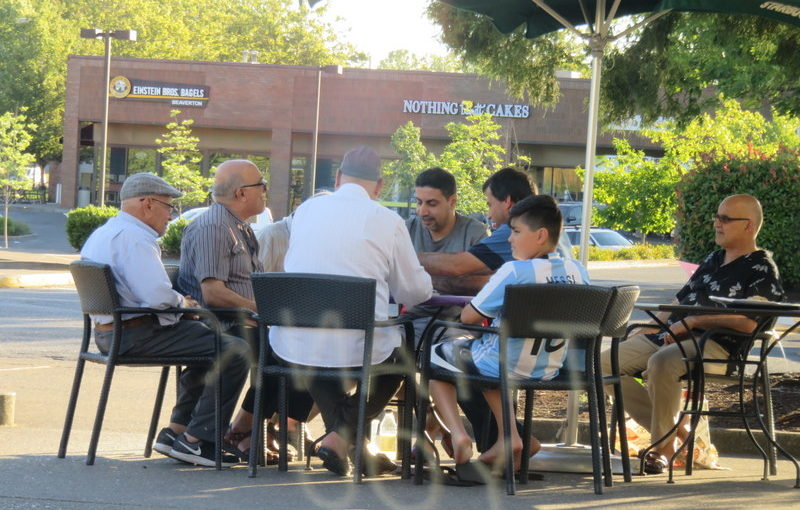
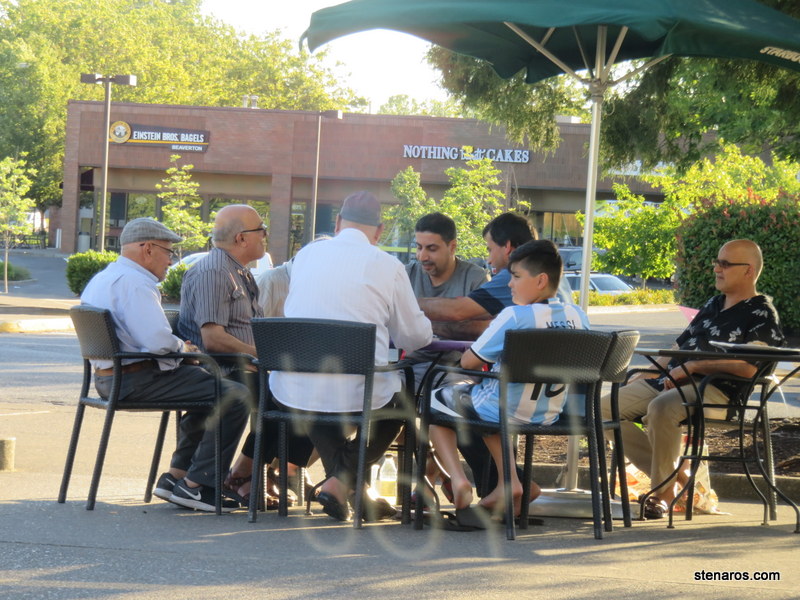
After, we went to eat and I caught a picture of this group of men through the window.  Their age span makes me think this is a family group, but they could also be enthusiasts of some kind.

Manhattan Project Hanford

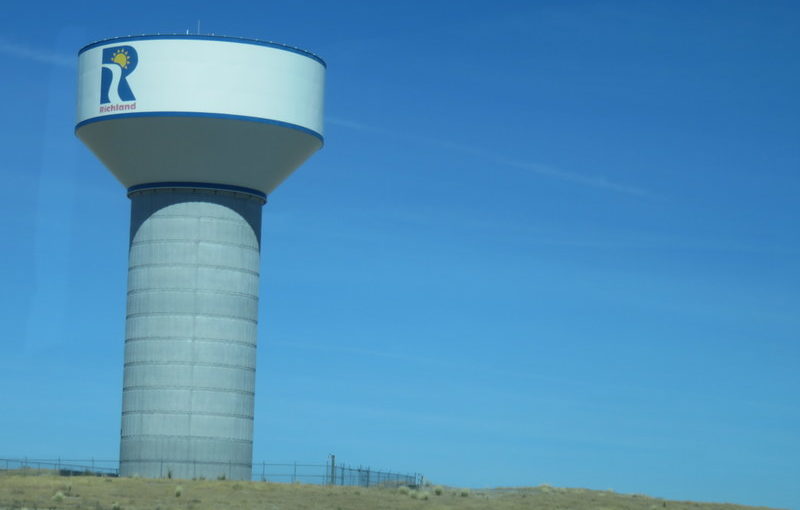
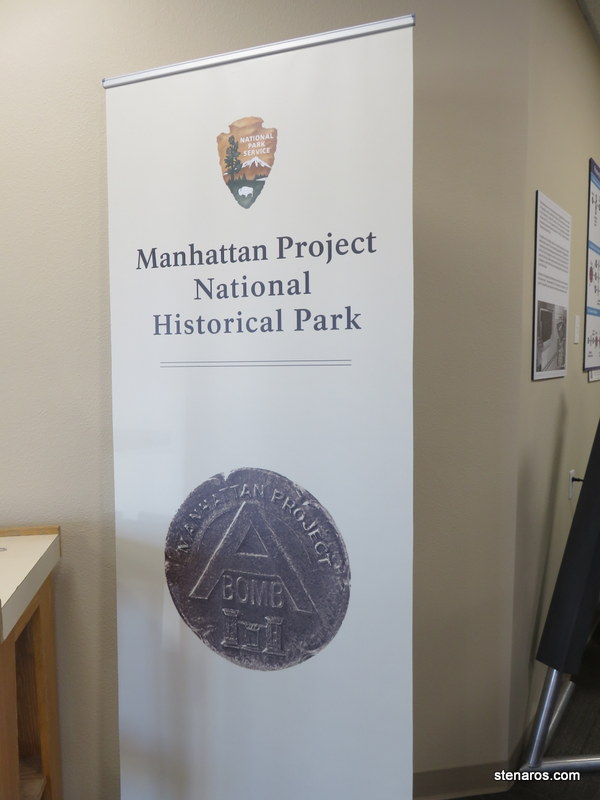
The Manhattan Project National Historic Park is made up of three sites:  Oak Ridge, Tennessee; Los Alamos, New Mexico; and Hanford, Washington.  Fun fact:  If you collect National Park Stamps, the stamp for the Manhattan Project is in three parts.
There are two tours offered at the Hanford Site.  Here is the link to register. We took the Historic B Reactor Tour, but had I known the Pre-Manhattan Tour existed, it would have been my choice.  Each tour takes up a big chunk of the day and involves a bus ride to the site, a guide and a lot of time to look around.  All for free.  Thank you, National Park Service.

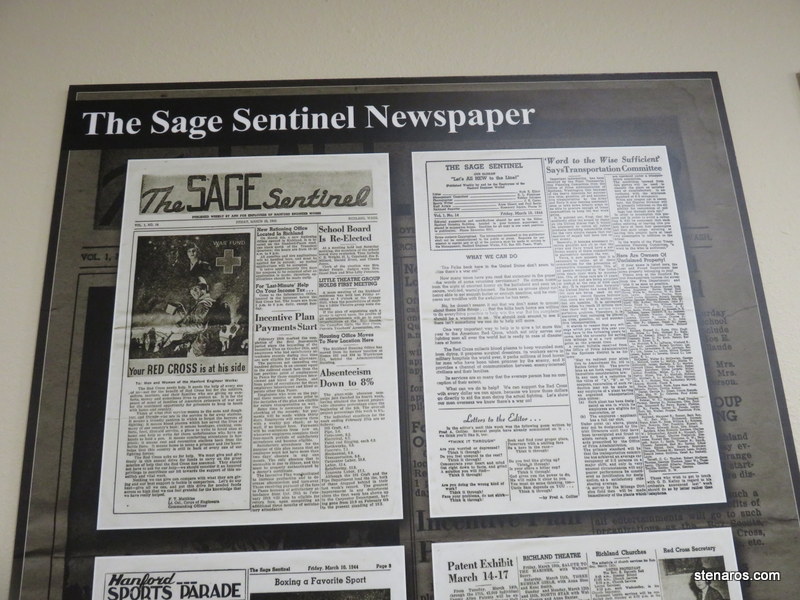
We met outside of Richland, where we looked at some exhibits, like this newspaper. Our guide showed us an introductory video and then we loaded up the bus and were off.

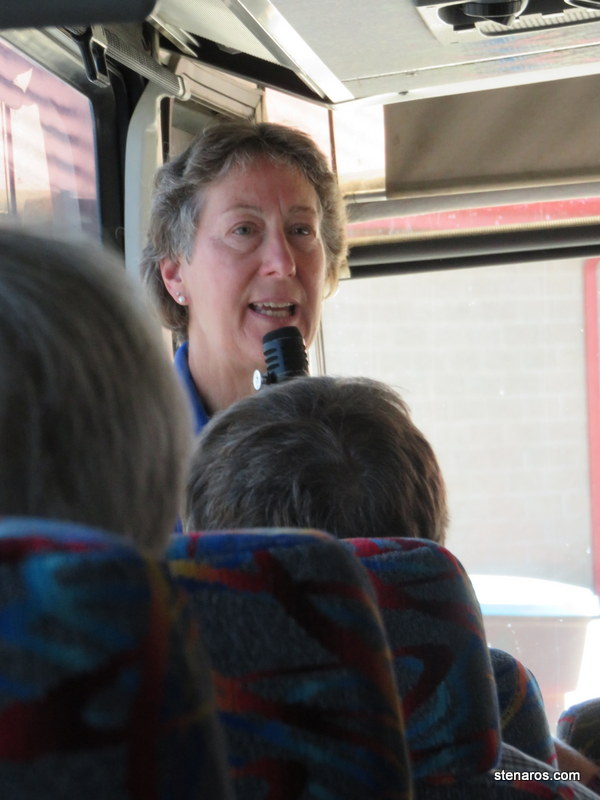
Our guide was great.  She also teaches Biology to college students.  She was very good at repeating the questions asked so everyone could hear them and knowledgeable overall.

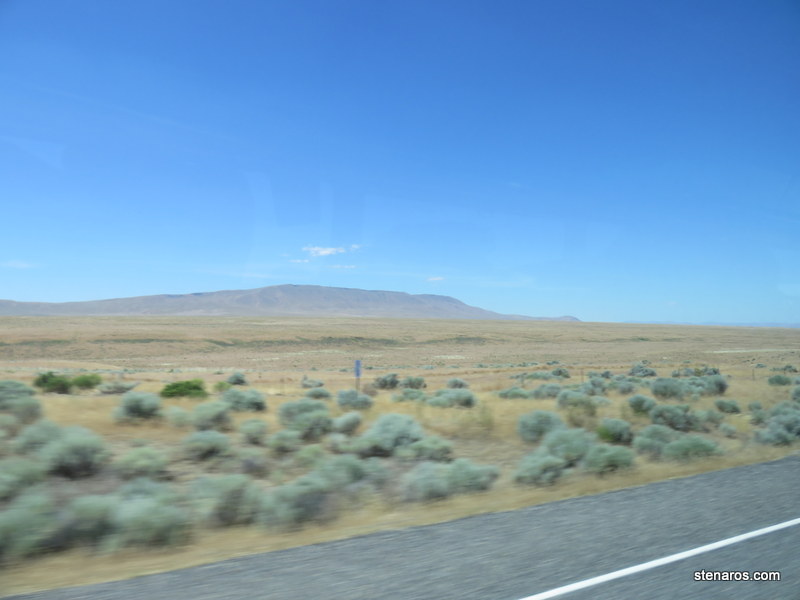
Headed out to the site.  At a certain point in history this road would have been closed to the general pubic.

It wasn’t a long trip, but did allow for a short nap.

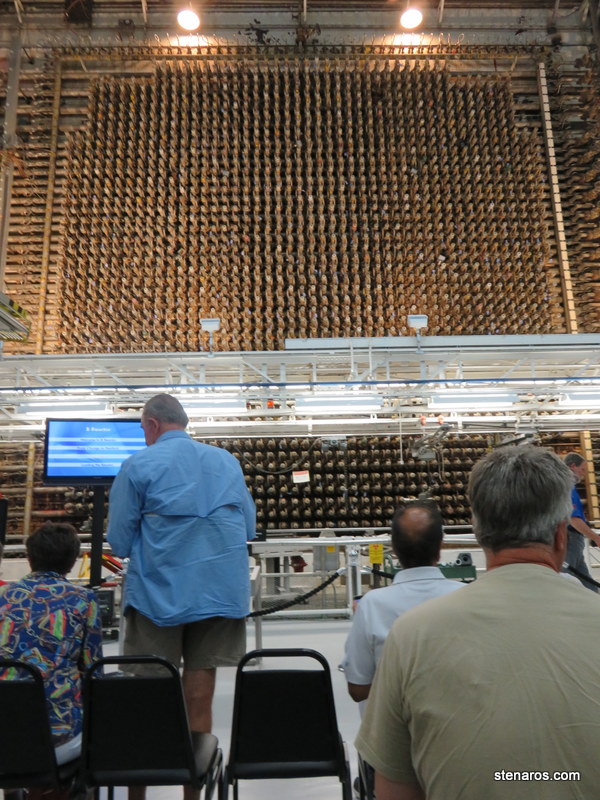
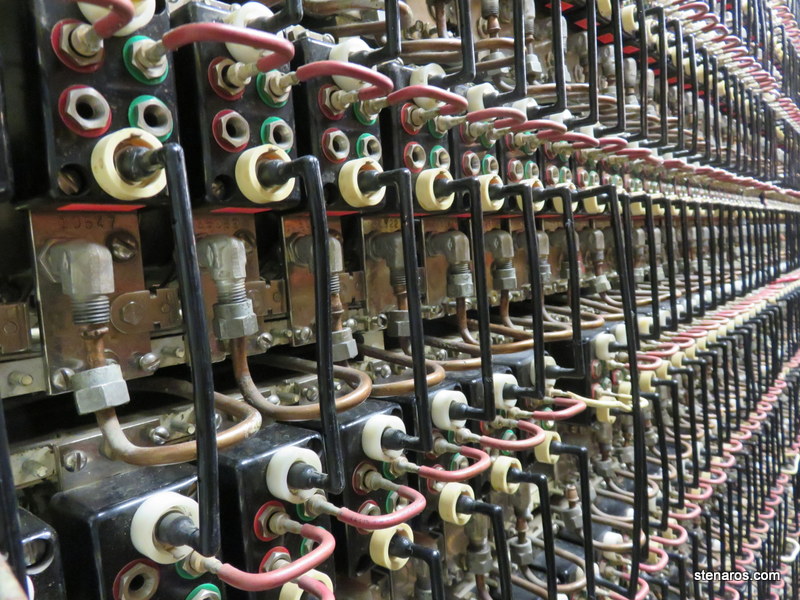
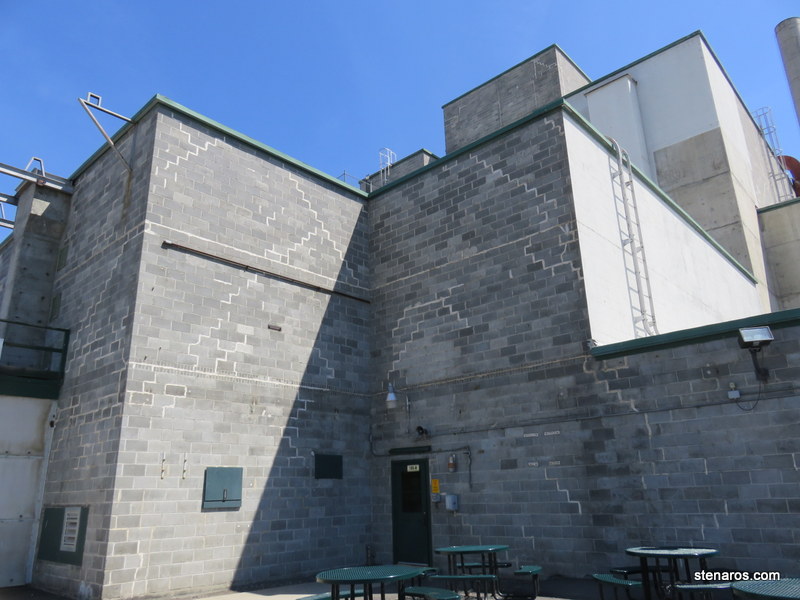
And here it is!  The historic reactor.  What you are looking at are the caps on the rods.  Scientists changed the amount of plutonium produced by moving the rods in a very big cube. [Science!  Not my strong suit.  Go watch a video or something if you want to know more]

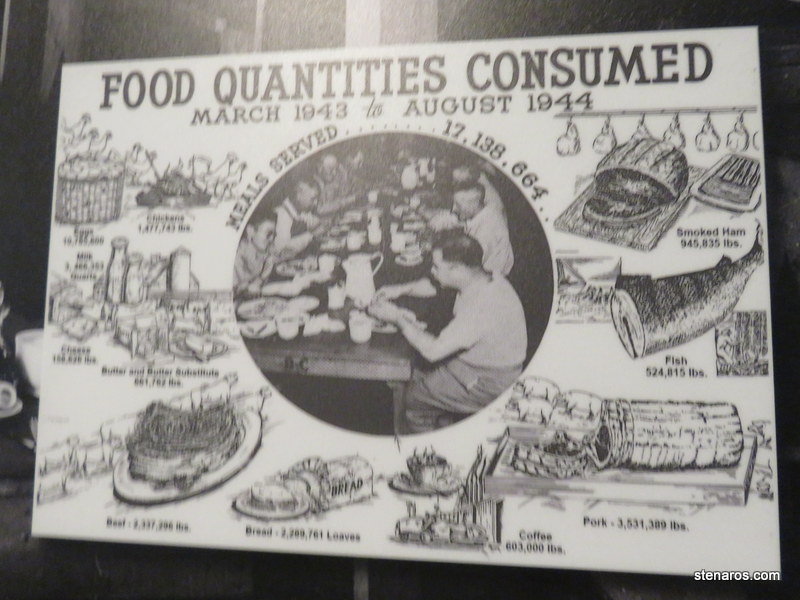
As usual with science things, I was more interested in the people part of the equation. A whole bunch of people had to be recruited to this desert to build the reactor.  They weren’t told what they were doing, just that things needed to be built.  And the people needed to be fed.
The site was full of all sorts of repeating colorful patterns.

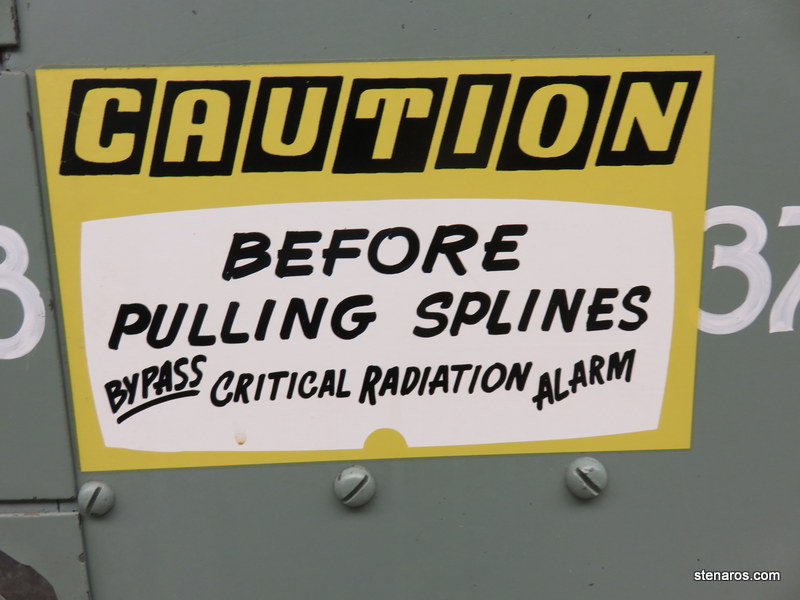
And some good vintage and modern signs.

Here’s the view from the outside.  Once everything was built, the construction camps were taken down.  The town of Richland was rebuilt so the workers at Hanford had nice places to live. That’s where the Alphabet Houses came in.  The population of Richland was 300 before residents were evicted in 1943.  Then workers for the Hanford Engineering Project arrived and there were 25,000 people in Richland by 1945 Spokane Architect Albin Pherson designed most of the city. He designed a variety of single family homes, duplexes, apartment buildings and dormitories.  Each design was designated with a letter of the alphabet.  If you visit Richland, you can walk through the Gold Coast Historic District and see a selection of the Alphabet Houses.
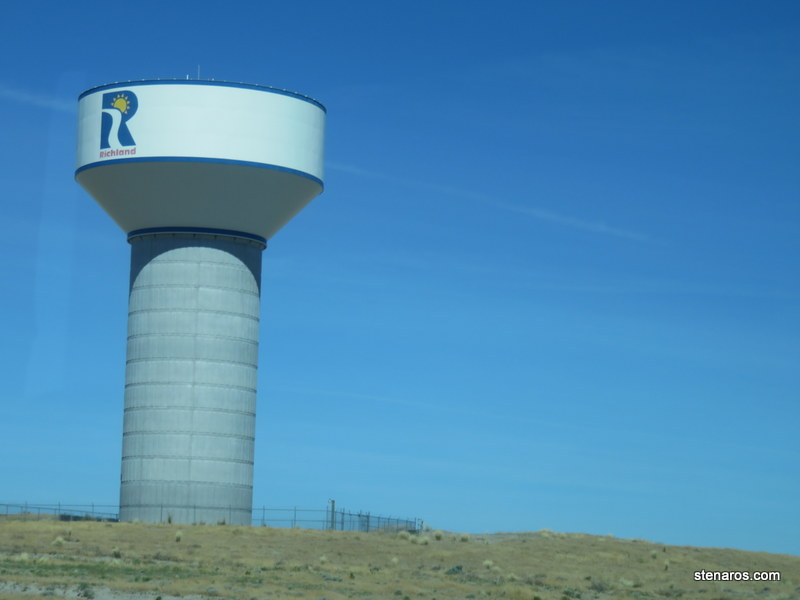
I greatly enjoyed my tour of the Hanford site and recommend it for anyone visiting the area.

REACH museum

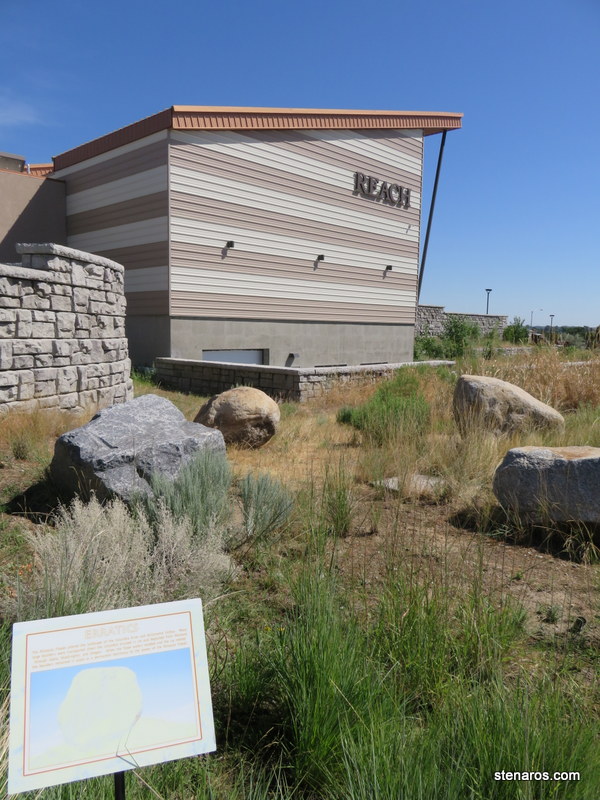
We were in Richland to experience the Hanford tour with Matt’s mother, but we stopped at the REACH museum first.

I’m still uncertain just what the REACH museum is, even after having visited and after looking at their website. I think it’s talking about how the Columbia River sustains a large area around it.  Here’s a big picture of the Columbia and how it reaches so very far, as indicated by the green patches.  I think that big brown area where the word “irrigated” is might be the Hanford site.

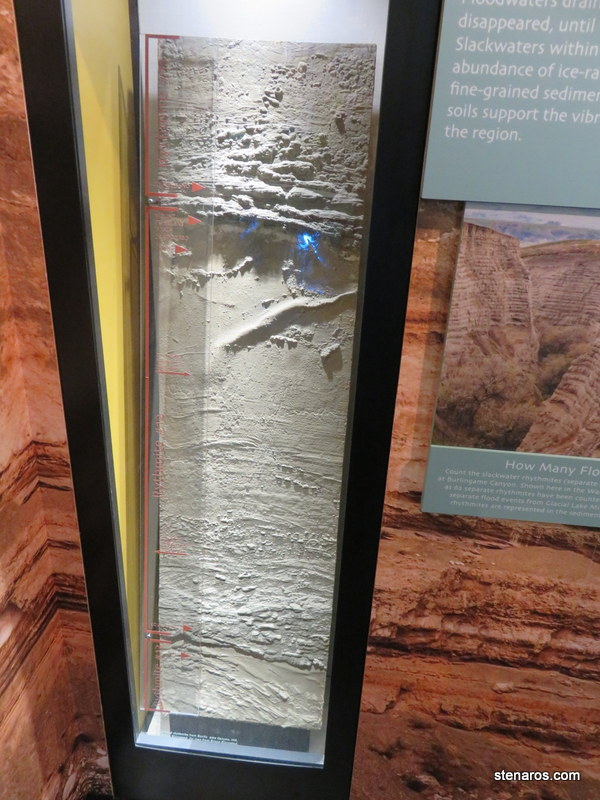
The REACH had some nice displays of how the Tri-Cities area developed, geologically and with human influence.  It’s also the first place I learned about the 2300 people kicked off their land with 30 days notice so the Manhattan Project could build a nuclear power plant.  Also about Alphabet Houses.

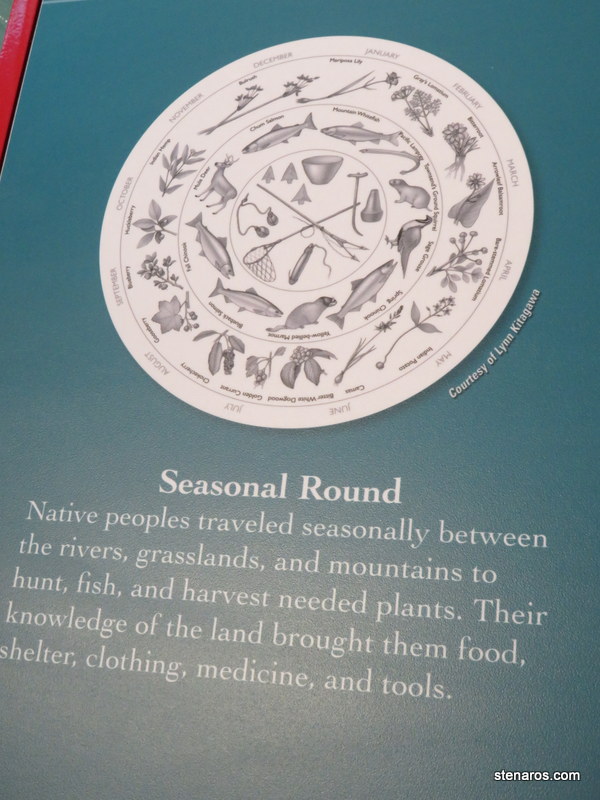
Other people displaced by the Manhattan project?  Native Americans.  They had lived in the area for thousands of years.

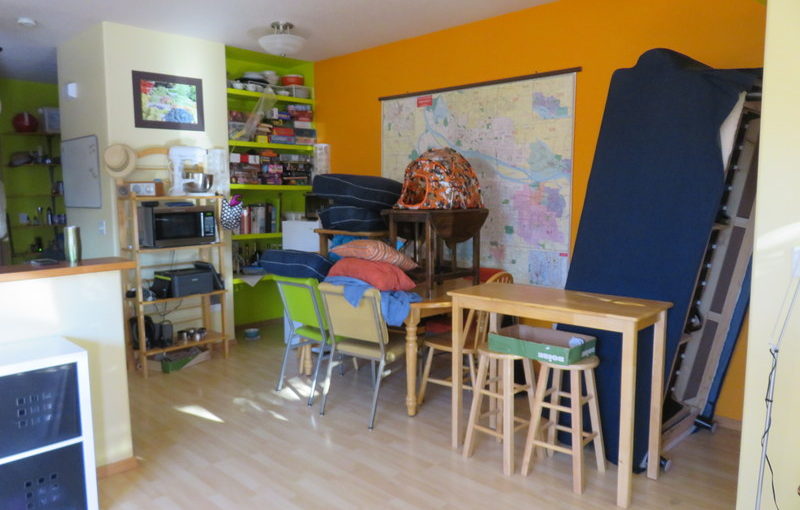
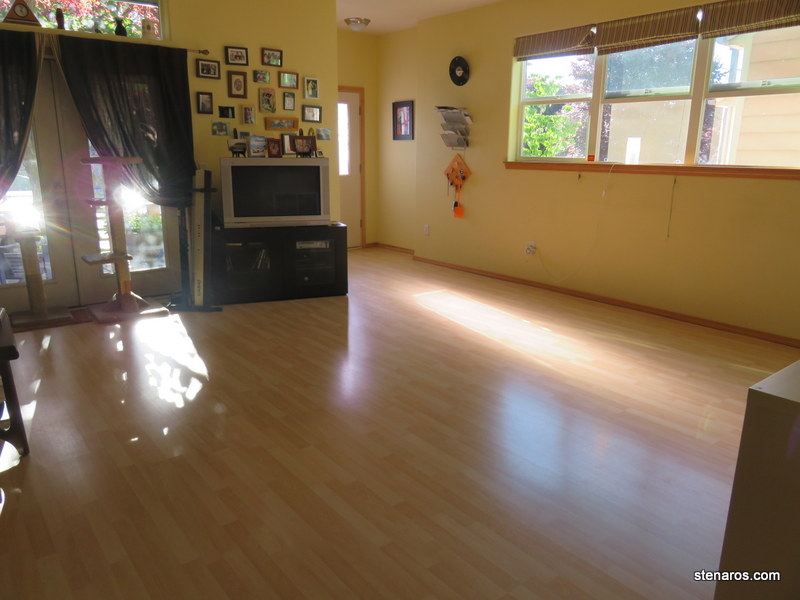
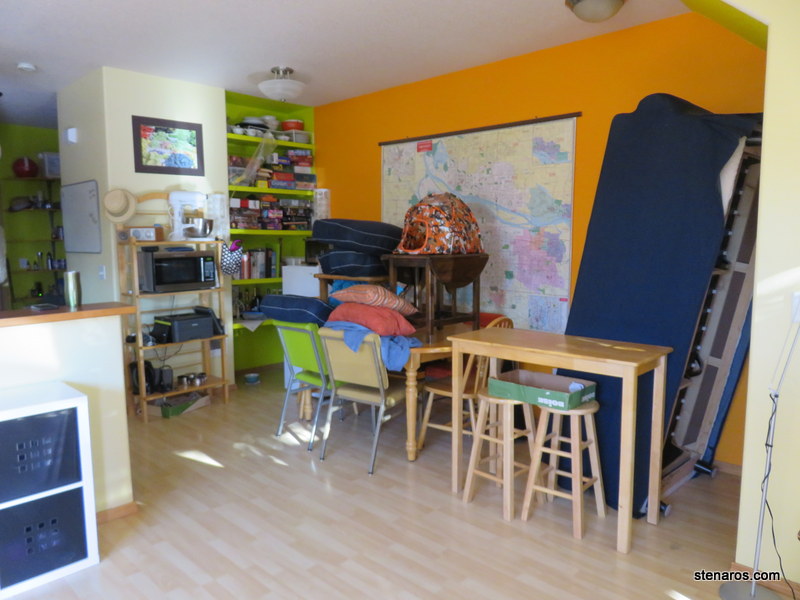
How big is my living room?

Our square dancing class wants to learn the Plus Level this summer, so we are having lessons in my living room, which is just big enough for a square.

And here’s where things are stashed.  There are also chairs hidden in the pantry, out of site.

It’s times like these that I have the greatest affection for my little house.