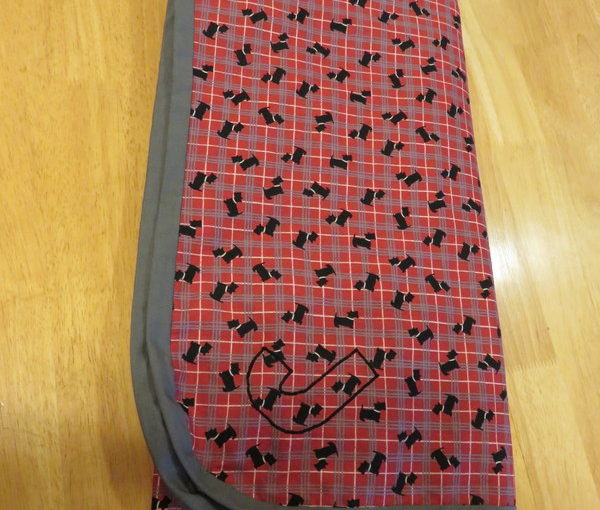
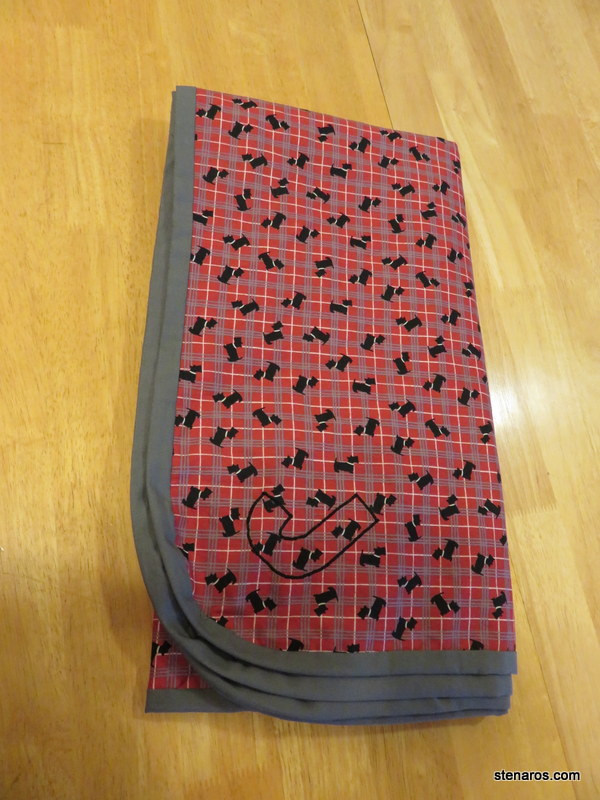
I think this turned out really well and am forever thankful friend Julie came along to assist in material selection.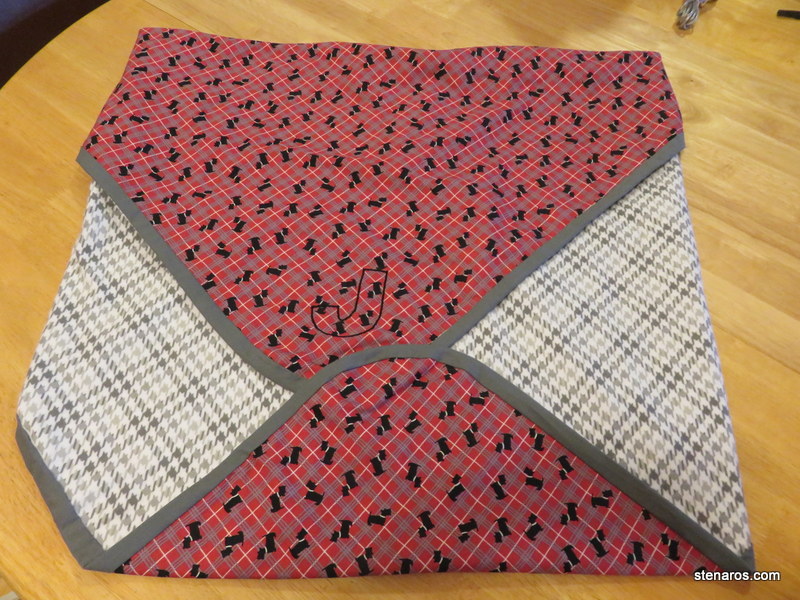
Tag: projects
Learning to machine monogram for baby blankets-to-be
I made a baby blanket last summer and I hand-monogrammed it using satin stitch and guess what? I’m not doing that again. It takes too long, plus I’m guessing most of the monogram has frayed away by this point. But I love a good monogram. So it’s time to learn to machine monogram. Because I’ve got two baby blankets to make.
I decided to practice on a sheet. I found the style of letter I wanted, printed it very big, cut it out and then used tracing paper to transfer the outline to the sheet. You can also see in this picture I was listening to a podcast via my Bluetooth speaker, I was planning a hike (blue book) and there was something going on with those light bulbs.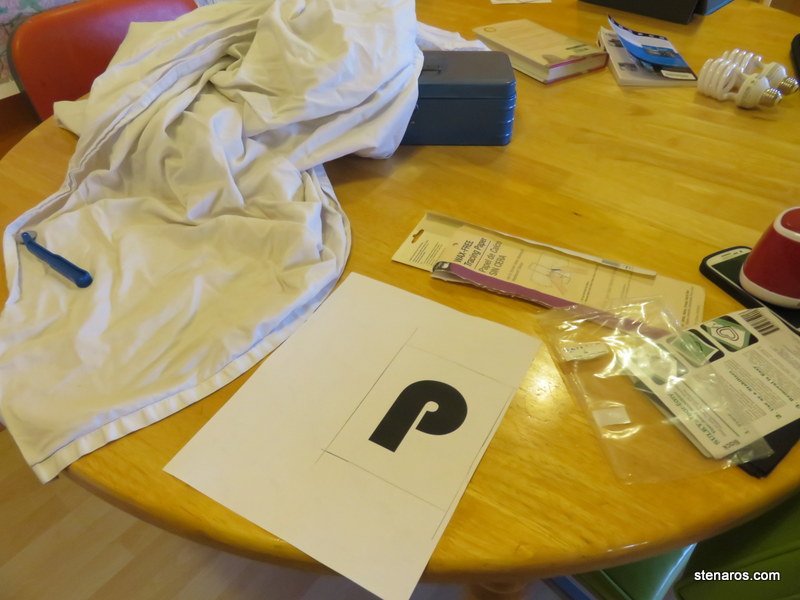
I bought some backing, which is sitting on the table in the above picture, right next to the phone, and it worked like a charm. I also googled to find the proper kind of thread to use for machine monogramming. It’s a different kind than for all-purpose sewing. As you can see, there are some shaky places, but overall it turned out okay. You can also see the short line of stitches I made along the edge when I wasn’t quite sure what stitch width and length I should use.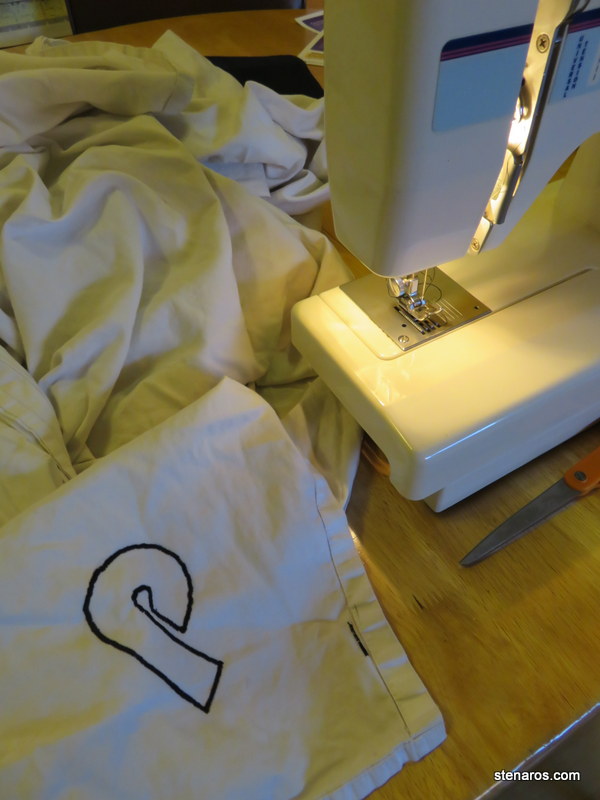
Confident (enough) in my skills, I monogrammed the two pieces of material. Again, not the best job, but livable.
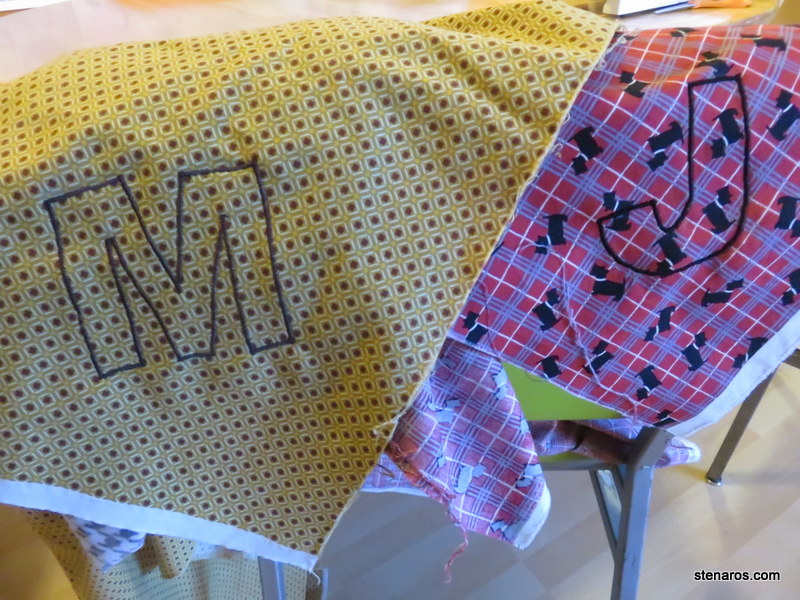
“But wait!” I hear you wondering. “What if the people you are making the blankets for see this post? Won’t the surprise be ruined?” This is the plus of having a blog with very few readers. Neither recipient of a blanket reads this blog, thus the secret is safe with us.
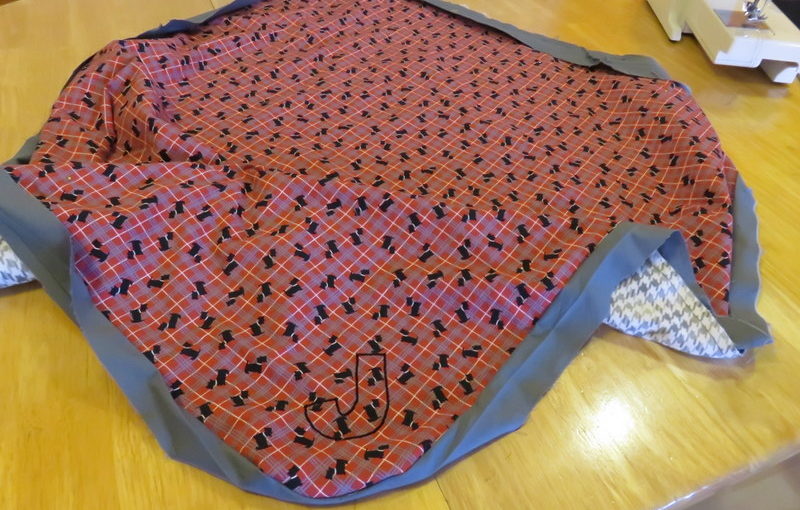
Buoyed by that success I continued on with sewing the blanket for baby J and made it through all the steps but the tacking of the binding, which will be done while watching movies. 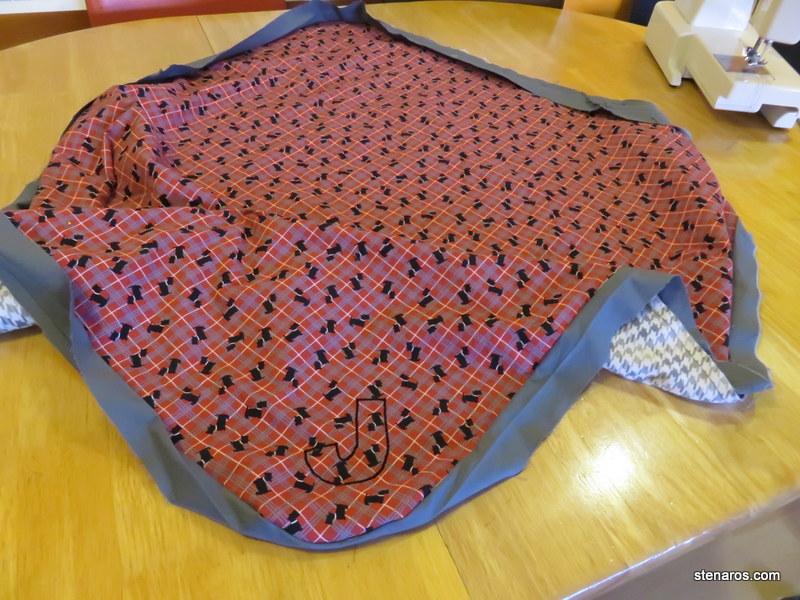
I’m pretty excited about how good this project looks. (And thanks to friend Julie who wandered the fabric store for a very long time until we found exactly the right front/back combo.)
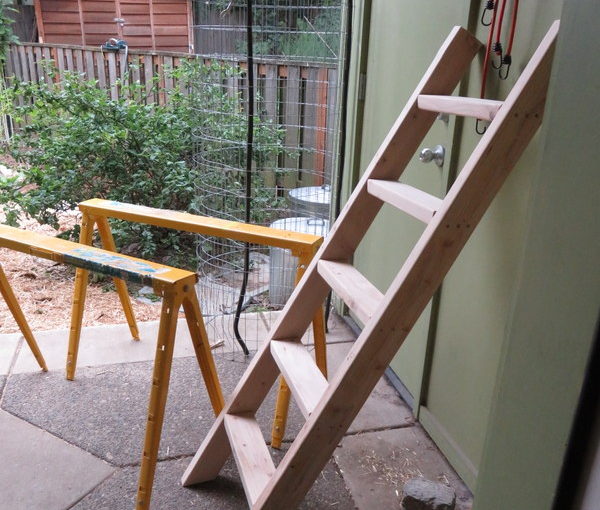
Ladder completed. Reverse Loft phase 1 completed!
Every spring I develop an obsession (or two.) It happens when the days get longer and I have much more energy and suddenly I’m compelled to MAKE something, dammit. In 2016, this time of year coincided with my reading of Spark Joy, which is book two of Marie Kondo’s quest to change your life through tidying. Somewhere in the pages of Spark Joy Kondo said you should make an effort to live the way you’ve always wanted to.
And I thought: reverse loft bed!
I’ve been thinking of the reverse loft bed off and on for years now. After college, I designed and built a loft bed, but I didn’t love it. It wasn’t any fun having to climb down the ladder in the middle of the night to go to the bathroom. I’m more of a roll-out-and-shuffle kind of girl.
But what if you put the bed on the bottom and put the loft space on top? Various permutations of this concept have been thought through and discarded, partially because it’s a big project and partially because I kept getting stuck on the fact that if I did built this, I would not have access to one side of my bed. This would make it very hard to make the bed and I already hate making the bed now.
But this time I had a breakthrough realization: trundle bed! What if the bed was tucked neatly away under the loft structure and when it came time to strip the sheets and remake the bed, you could slide the bed out, giving access to both sides? Brilliant!
So here’s what I’m thinking. Visualize with me. Close to the ground would be the trundle bed structure that would hold my mattress. Above it would rise the loft structure, essentially giving me a rectangle of elevated floor about four feet off the ground. My desk would go on top and there would possibly be room for a small lounging chair. The bed part would slide out of the loft structure for the above mentioned bed-making reasons. There would be curtains around the two open sides of the bed area, so my sleeping space would be a cozy cave. I’m a fan of small sleeping spaces. In one place I lived, I slept in my closet.
I did some research, and while I didn’t ever find any evidence on the internet of anyone building a reverse loft bed, (this was the closest thing I found to the concept) I did find a lot of information about loft beds and trundle beds and this project now seemed doable.
The plus of the trundle bed concept is that I could build this project in stages. First would come the trundle bed part and then, having that finished product, I could design the loft space around it.
With all systems go, I started sketching and figuring and setting my plan in motion. And then I realized I needed to accommodate the cats.
The cats currently have a perch in the window. Right now, it’s easy for them to get to because they jump from the bed to the perch. Once the whole project is done, I will remove the perch because the window sill will be about six inches off the loft floor. But in the interim, when I make the trundle bed, the mattress would be significantly lower and I’m worried that the 12-year-old cat would not be able to make the jump.
So I decided to build the ladder first. And build it I did this weekend out of 2x4s.
Here’s the completed ladder: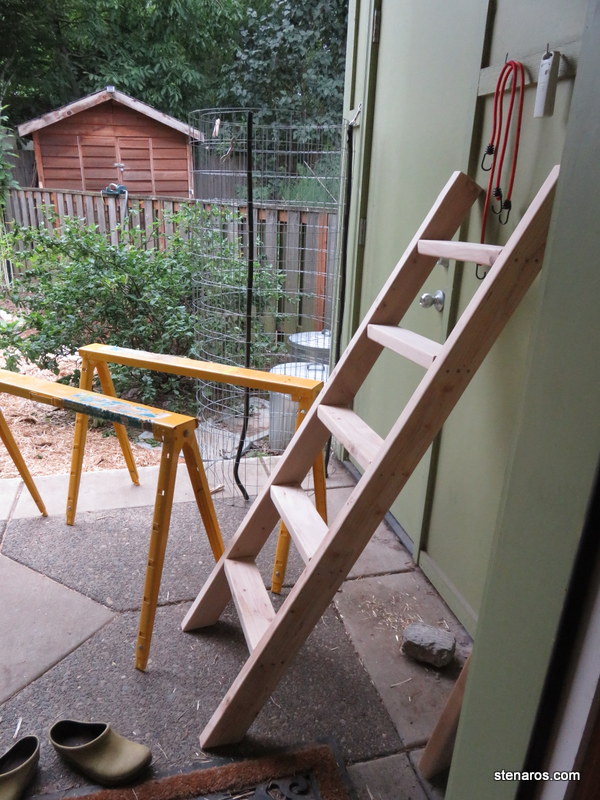
Here is where it goes for now: 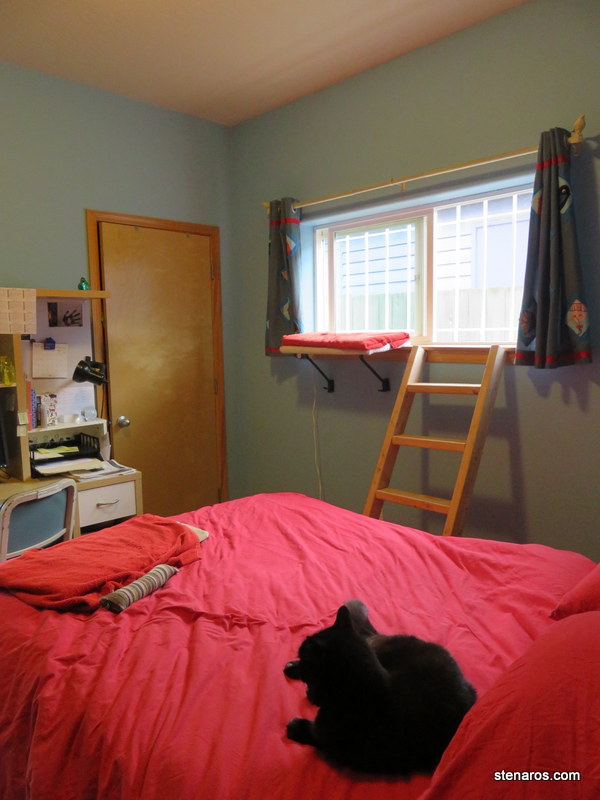
And here is me attempting to lure my cats onto the ladder.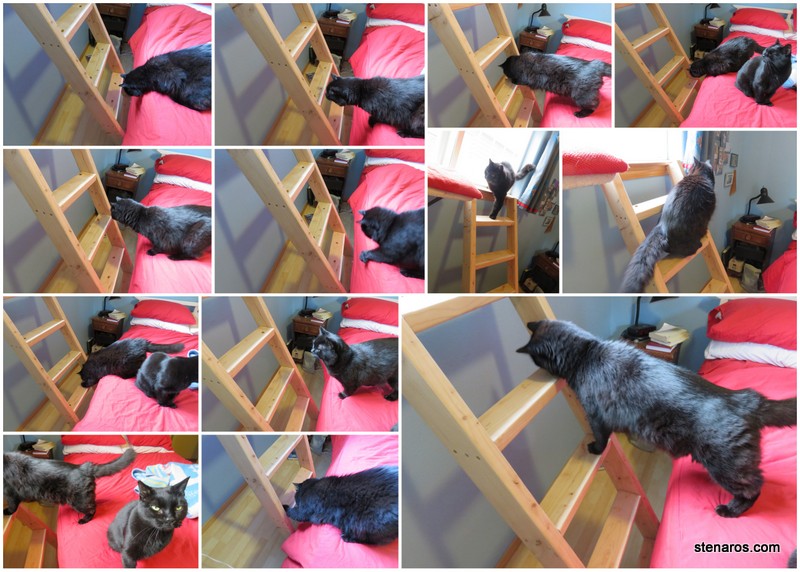
Phase 2 will be building the trundle bed and will commence soon (hopefully).
“Welcome to the house,” says Sentinel
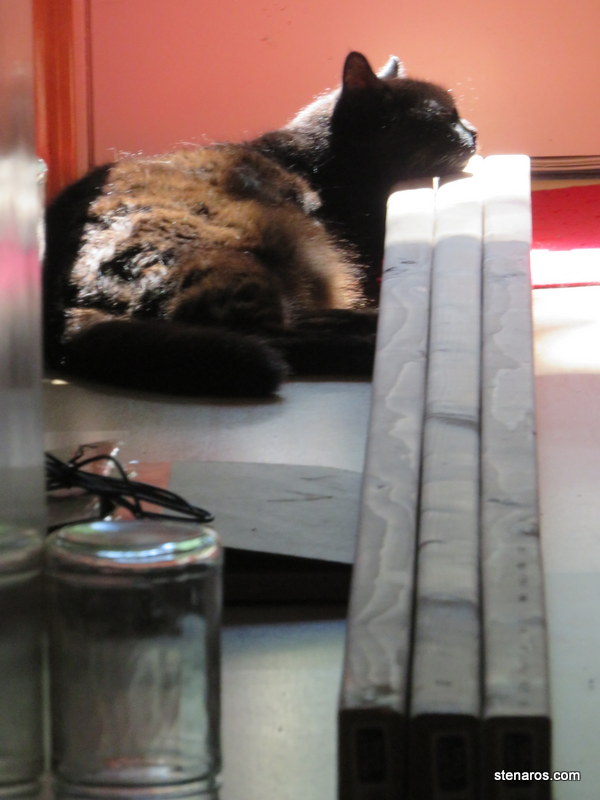
Three two-by-fours waiting to be transformed into a ladder don’t escape Sentinel’s notice. And what better way to welcome them to the household than to use them as a pillow?
Portland Fit Sashiko T-quilt block completed.
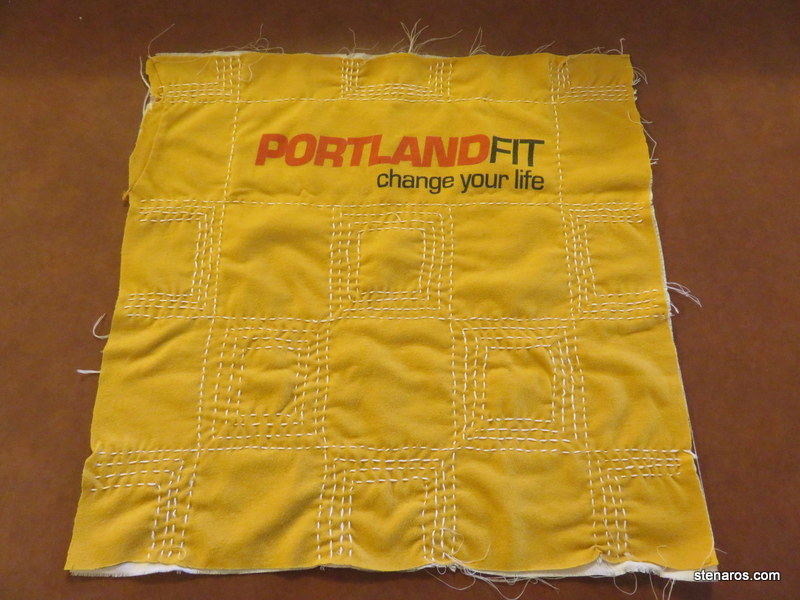
I have completed my first block in my t-quilt. Doing this block of Sashiko embroidery has taught me that this will be a very, very long project. This t-shirt is five movies worth of work time. Knowing that, I have sorted and prioritized my t-shirts and will first embroider the shirts from high school and college. Which means this is really block zero and the next shirt I do will be the first block in the t-quilt. If and when I finish that quilt I will start on the post-college t-shirts.
I’m pretty happy how this turned out. It doesn’t look super professional, but it’s doing what it should, namely holding the stretchy t-shirt to the solid block of fabric behind it.
It’s a new year! Stuff got done.
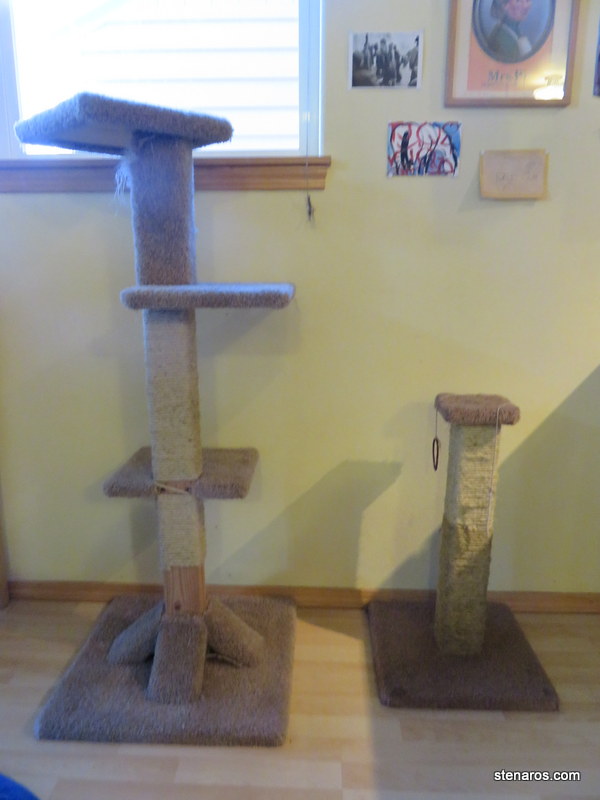
I purposely didn’t plan very many projects to work on over the break. In fact, the only plan was fix cat tree, so Antares would stop scratching the furniture. Julie came over and we used sisal rope to replace the fraying sisal. Good job us!
As a reward, we prepped for my t-quilt, yet another massive undertaking. My last quilt was made out of 3″x3″ squares of denim and other old pants. It took more than five years and when it was done, I found it to be ugly. But it’s super warm and keeps me warm every winter. I just put a comforter on top so I can’t see my design. So I have low expectations for this project. But at this point I need to get started as I have been saving t-shirts from high school. (Borah High Class of 1993.)
I bought sheets at Fred Meyer (one black, one white) and we created a 15″x15″ template and cut out squares of backing for the t-shirts. Then, we created a frame (seen behind the square template made out of brown paper bags) so I could center my t-shirts before I cut them to size. And then we cut two t-shirts so I could get started.
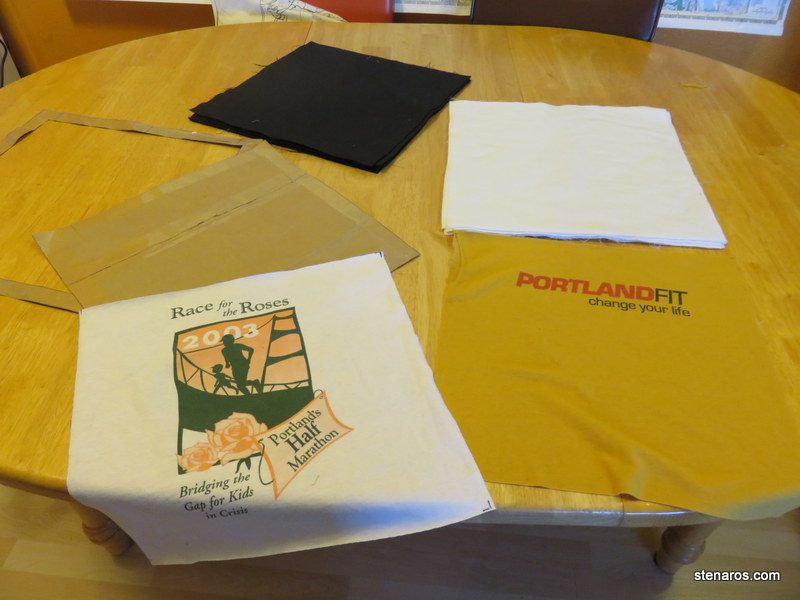 My plan is to affix the t-shirts to the sheet/backing using Sashiko embroidery. I’ll let you know how it goes.
In the meantime, it was nice to have Julie’s big self-healing mat and rotary cutter, as well as her company. Thanks Julie!

My sashiko journey begins here.

It all started with Collette Patterns selling sashiko embroidery kits for Christmas one year. What was this sashiko stuff that looked so pretty? It turns out it is a Japanese quilting method, where layers of cloth would be held in place by really amazing geometric and beautiful embroidery. Some examples here and here. When I heard “layers of cloth” I thought of the t-shirts I’ve been saving since high school to make into a quilt. I bought a t-quilt pattern years ago, but never started it because the first step was fusing interfacing to all the t-shirts to keep them from stretching. I hate fusing interfacing, even to a collar, and there was no way I was going to do that to 40+ t-shirts. Plus, it would make them all stiff. But what if I could use sashiko embroidery to affix the stretchy shirts to a woven backing fabric?
This idea turned around in my head for a few years. The tidying this spring was what finally got this project in motion. I’ve got an entire drawer full of t-shirt fronts ready to turn into a quilt. I’d better start making a move toward turning them into a quilt sooner rather than later. So I finished all my other at-home-movie-watching projects which meant it was time to buy supplies.
However, I decided to learn sashiko techniques by making two pillows first. Julie and I traveled to Fabric Depot and I came back with this orange fabric, a blue fabric, needles, two kinds of thimbles, sashiko thread and a new color of Clover chaco marking pen.
If the pillows go well, I can begin sashiko on the t-shirts. If it doesn’t, I can use the technique I just discovered, which involves rotating a backing t-shirt to cross grain to provide more structure. This would would be much easier, but I’m hoping the Sashiko thing works out.

Good bag. Indygo Junction #IJ805 Grids and Grommets Bag.

It has a great look while hanging.

I’m not a fan of the lion print inside, but there are inner pockets and it opens up very wide.

The straps are good sized and the pattern directions point out that you can double them up and put them over your shoulder make it a single strap to go across your chest.
Should I feel the urge to make a bag, this might be the one.

Completed receiving blanket

And we are done! I really like the size of this and the colors turned out to be fun.
Having one side be flannel gives the blanket a nice weight to it.

Binding troubles (I brought on myself) aside, this is a quick and easy project that looks great. It may become my go-to baby gift.
Media consumed while making this:
Mikey & Nicky
A New Leaf
Sherlock Season 2
The Sessions
This American Life episode 443
Dear Hank & John 008
Filmspotting SVU #87
Please Give
Endless Love
This is Where I Leave You

Let’s making a receiving blanket.
Friend Heidi mentioned she had a pattern for a baby blanket and since I needed to make something for a soon-to-appear baby, she gave me a copy. Here are the instructions. Fabric in the City is no longer in existence, but it’s nice that their pattern lives on.
If you are going to use this pattern, I will add my notes right here:
1/3 yard was not enough for 2.5 inch binding. 1/2 yard would have been better.
My four strips did not reach all the way around my material, as you will see. I had to join pieces together.
For an excellent binding tutorial, including joining pieces, I used this link: https://youtu.be/2egganTi2us
After you sew you binding to the blanket, go around an make sure that you have actually attached the three layers together. I didn’t do that and discovered two places where the binding wasn’t attached.

Here I have placed my two fabrics together so I can cut them to be the same size.

Before I got to this point, I added a satin stitch monogram to the green material. I learned that satin stitch takes a very long time when you are doing it by hand.
At this point, I was disappointed to note that the ladybugs show right through the green material. Harrumph.

Using my awesome quilters ruler to mark out 2.5 inch binding strips.

I used my Clover Chaco Liner Pen–another excellent product–to mark my binding strips. At this point I thought, “It doesn’t look like this binding will be long enough to go all the way around. What would have been smart would have been to measure to find out the answer.

But what I did instead was cut out the binding to prove that it didn’t stretch all the way around. Feels so good to be right, doesn’t it? Then, unfortunately, that feeling dissipated because I was only left with the option to cut the binding strips in half. So I went from 2.5 inches to 1.25 inches. Trust me when I say that this makes a very narrow binding.

Other late-breaking conundrums. I realized that with my smaller binding, I would now have to cut off the selvages. I did this, and then had to re-trim the green material.

Here, I have pressed the binding in half and sewn it to the fabric layers. I followed the directions on the link above, though I used a 1/8 inch seam, rather than 1/4 because I didn’t have 1/4 inch to spare.

Then, because I didn’t have 1/8 inch to spare on the other side of the seam line, I did a lot of tiny, careful trimming. Trust me when I say I brought all this on myself by having to prove that the binding didn’t go all the way around. It would have been so much easier if I had just knocked my binding back to 2 inches.

Then it was time to hand-sew the other side of the binding to the blanket. We will pause and read a few more movie reviews while I do this.